



%201.svg)

The shift to electric vehicles (EVs) across the Middle East keeps picking up pace, but nowhere is this transformation more pronounced than in the United Arab Emirates. Whether you live in Dubai, Abu Dhabi, or one of the Emirates’ fast-growing communities, the presence of EVs on roads and in car parks is increasingly hard to miss. At a time when the global automotive industry is in the midst of rapid change, the UAE has emerged as the clear regional frontrunner , and 2026 is set to further deepen its lead.
But why does the UAE account for such a large share of Middle East EV sales, and what sets it apart from its neighbours? From robust charging networks and broad model availability to supportive government policy and growing trust among both private owners and fleets, there are structural reasons behind the Emirates’ EV dominance. This article takes a closer look at those reasons and what they mean for buyers, businesses, and the wider market landscape in 2026.
Why the UAE Leads Middle East EV Sales
The UAE’s hold on nearly half of the region’s EV sales is no accident. A combination of forward-thinking policy, early investment, and a market environment suited to new technology has put the Emirates out in front while neighbouring countries catch up.
Early Infrastructure, Early Adoption
Years before EVs became a mainstream topic, Dubai and Abu Dhabi launched pilot programmes and demonstration fleets, installed initial charging infrastructure, and set targets that forced the pace of adoption. Local authorities realised early that waiting for critical mass wouldn’t work , infrastructure and policy had to run ahead of the market to build demand.
Confidence and Trust Among UAE Buyers
There’s something tangible about the confidence local buyers have in trying new tech. With world-class retail, digital services, and premium car markets already established, EVs fit naturally into lifestyles shaped by convenience and rapid change. When customers see fast-charging stations at malls, offices, and roadside stops, and hear friends or colleagues making the switch, hesitation fades.
The Role of Dubai and Abu Dhabi in Setting the Pace
Both Dubai and Abu Dhabi use EV targets to influence the entire Emirates. Policies enacted in these cities , such as allowing EVs to use special lanes, waiving registration fees, or mandating government fleet electrification , routinely set benchmarks for smaller regions to follow. The learning from local pilots shapes investment and service delivery for years ahead.
Charging Networks Make EV Ownership More Practical
Charging convenience is the biggest practical hurdle in real-world EV ownership. Unlike petrol cars, where fuelling is almost never a worry, driving an electric car means actively planning where and how to recharge , especially in a climate as hot and widely spaced as the UAE.
Public Charging Keeps Up With Demand
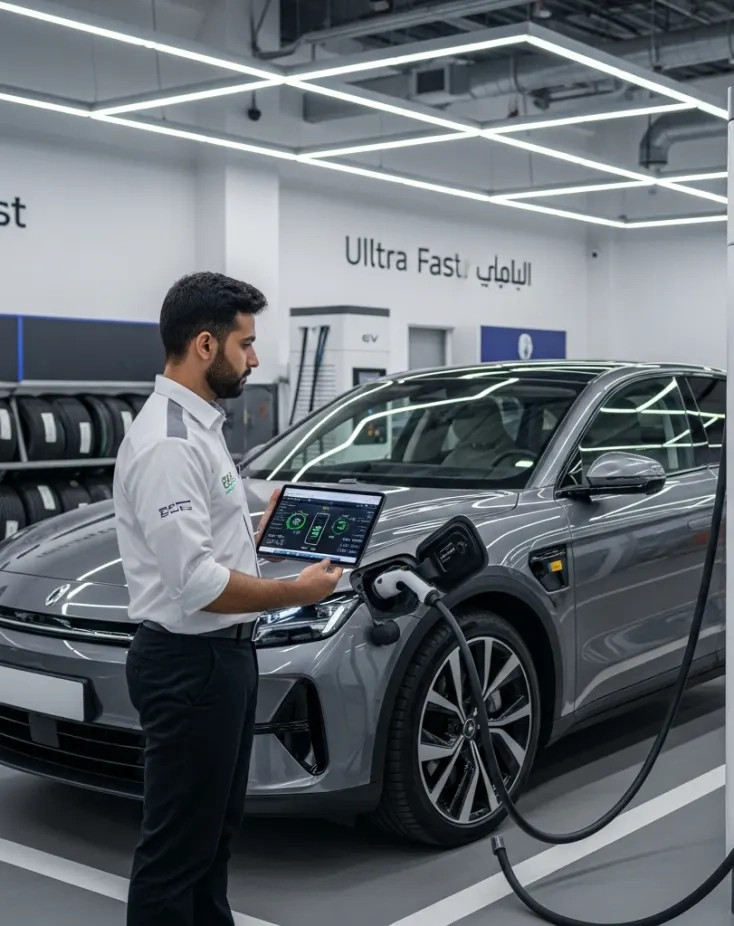
The numbers paint a clear picture: Dubai and Abu Dhabi boast the densest public charging networks in the region, covering urban centres, airport parks, malls, and business districts. Expansion plans continue to pace market growth, with new high-speed charging corridors linking city clusters and transport hubs. For most urban residents, overnight home charging is now supported in newer buildings, while destination chargers at hotels and malls lower range anxiety for those in flats or tourists renting EVs.
Fast Chargers Connect the Emirates
The introduction of rapid chargers , capable of adding up to 80% battery in under an hour , has made longer intercity journeys practical. This is especially important in the UAE, where travel between Emirates for work or leisure is common. Regular drivers now structure recharging into their weekly routine instead of planning whole days around finding a power socket.
Home, Workplace, and Destination Charging Fill the Gaps
For drivers with access to private garages or workplace parking, slow or medium-speed charging is increasingly common. Residential communities, office complexes, and hotels are encouraged or required to install units. This blend of charging options makes the EV lifestyle far less restrictive than in countries where public infrastructure lags.
More EV Models Reach UAE Buyers First
Walk into a dealership or browse local automotive marketplaces, and the sheer variety of EVs available in the UAE stands out. Whether buyers want a compact city runabout, a luxury sedan, a performance SUV, or even a commercial van, chances are the latest models arrive here earlier than in neighbouring countries.
Automakers Prioritise the UAE Market
Many leading car brands see the Emirates as a beachhead for launching EVs in the wider region. Prioritising right-hand drive configurations, desert-tested cooling systems, and advanced software, they frequently introduce new models in the UAE before offering them elsewhere across the Gulf. This not only attracts private buyers, but encourages regional fleet managers to trial new vehicles with UAE-based pilots.
Wider Price Points Bring in More Buyers
Whereas some neighbours focus only on luxury models, UAE dealerships now offer EVs at a range of price points, including affordable city cars and family-friendly SUVs. State-backed financing offers, as well as emerging used-EV marketplaces, keep upfront costs more competitive.
Growth Across Multiple Vehicle Segments
The past few years have seen strong uptake across both the premium and practical segments. Luxury saloons and SUVs remain popular, but there is fast-growing interest among delivery companies, shared mobility operators, and government fleets for commercial EVs. This broad base gives the market resilience if any single segment slows.
Government Support Keeps EV Adoption Moving
Policy backing is a critical pillar of the UAE’s EV leadership. From the federal level down to individual emirates, the authorities have crafted a raft of measures to seed demand, cut ownership barriers, and ensure infrastructure keeps up.
Active Policies and Incentives
Current support measures include free or discounted registration for new EVs, exemption from certain road tolls, free public charging for limited periods, priority parking, and , in some emirates , fast-tracked vehicle import approvals. These make adoption clearly cheaper and easier than in neighbouring markets, where incentives are often piecemeal or under review.
Ambitious Public Sector Targets
Dubai and Abu Dhabi require a set share of public sector fleets to go electric by fixed deadlines. Procurement by government agencies signals confidence to private buyers, and bulk orders keep costs down while encouraging automakers to localise features for UAE conditions.
Incentive Gaps and the Future
Despite broad support, some incentives (such as free charging or fee waivers) have sunset dates or vary by emirate, creating occasional uncertainty. How these evolve in coming years will affect both private and fleet buyers. Watch for announcements and pilot schemes as policy adapts to a maturing market.
Lower Running Costs Improve the EV Value Case
One of the strongest recurring themes from real UAE drivers is how affordable EVs now feel compared to their petrol counterparts. Several factors combine to turn EVs into a smart financial decision.
Energy and Maintenance Savings
Charging even at public rates is routinely cheaper than refuelling with petrol , and home charging at off-peak rates, when available, is more economical still. Electric drivetrains have fewer moving parts, which means lower regular servicing, reduced brake wear, and minimal fluid changes. In a region where the cost of luxury petrol cars can mount quickly, the financial case for an EV gets stronger every year.
Total Cost of Ownership in 2026
As EVs become established, buyers increasingly look beyond sticker price to the total cost of ownership, including depreciation, routine service, and electricity costs. More transparent used-EV valuations and improved battery warranties (often 8 years or longer) further boost confidence in running an EV long term.
Financing and Resale Shape Purchase Decisions
Banks and finance houses in the Emirates now offer dedicated EV loans, occasionally at preferred rates. As the regional used-EV market matures, resale confidence grows. Buyers are less fearful about getting stuck with outdated technology, and the gap between EV and petrol car depreciation narrows, though not vanishing completely.
Fleet Demand Is Expanding the UAE EV Market
While everyday buyers are adopting EVs in growing numbers, it’s the large taxi, ride-hailing, delivery, and commercial fleets in the UAE that are driving significant volume and investment.
Why Fleets Are Leading the Way
Fleet operators are under public and regulatory pressure to cut emissions. Taxi firms in Dubai and Abu Dhabi now maintain large numbers of EVs to meet sustainability goals, while government contracts or concessions often stipulate an electric-vehicle quota. High daily mileage saves the most on running costs and exposes maintenance advantages.
Fleet Investment Sparks Charging Growth
Bulk EV purchases by large operators encourage utilities and charging providers to build out infrastructure faster. When a delivery or taxi fleet orders dozens of vehicles, it justifies new depot charging installations and motivates site owners to install fast chargers, benefitting the wider public over time.
Wider Impact on Consumer Confidence
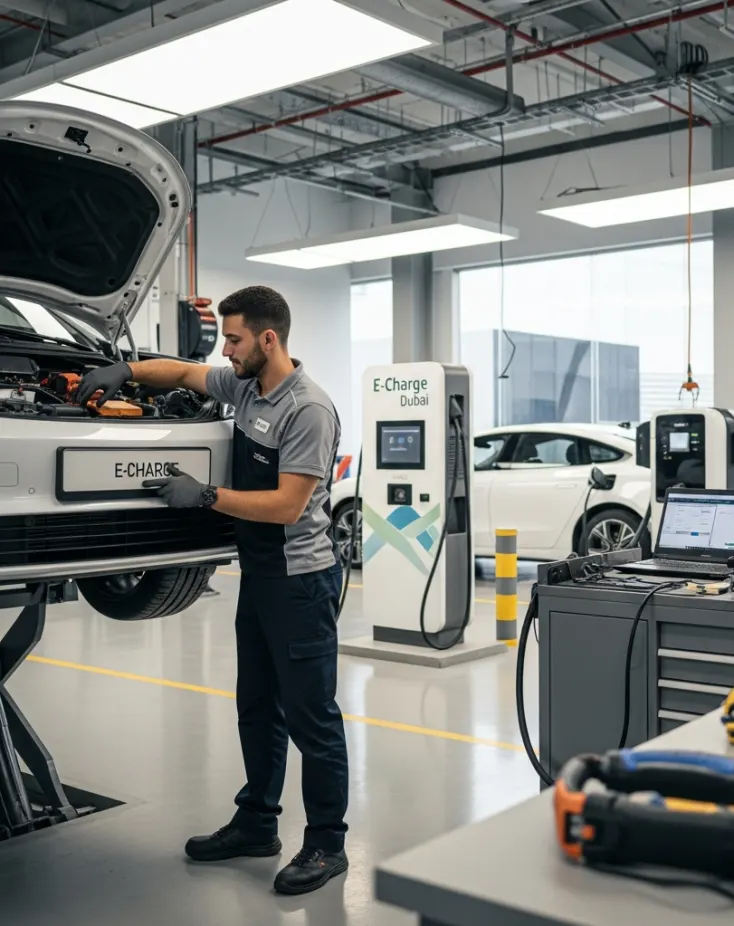
Seeing hundreds of electric taxis in Dubai or Abu Dhabi fosters normalisation among private car buyers and proves the technology performs under demanding conditions. As more fleets go electric, maintenance networks, parts supply, and repair expertise expand, which helps individual owners as well.
Looking Ahead: How 2026 Could Strengthen UAE EV Leadership
As the next wave of investment and market growth arrives, 2026 could prove a pivotal year in solidifying the UAE as the Middle East’s undisputed EV hub.
Potential for Even Greater Regional Share
With more brands launching EVs, battery prices falling, dealer networks expanding, and continued infrastructure upgrades, the UAE is set to push beyond its already-impressive share of regional sales. Further integration with public transit, such as EV buses and wider mobility-as-a-service platforms, may bring new urban buyers into the fold.
Risks and Barriers to Watch
That lead isn’t guaranteed. Challenges remain, including:
- Fluctuations in government policy or incentives affecting affordability
- Ongoing issues sourcing replacement batteries or parts from global supply chains
- High summer temperatures stressing battery longevity and performance
- Consumer concerns about resale value, particularly as technology evolves
Key Metrics to Follow in 2026
The expansion rate of public and private charging networks, continued government commitment to procurement and incentives, and changes in EV model availability will determine how strong the UAE’s leadership remains. As the ecosystem matures, watch fleet electrification rates and used-EV resale market health as bellwether indicators.
Conclusion
2026 is shaping up to reaffirm the UAE’s status as the Middle East’s premier market for electric vehicles. From robust charging networks and a wide variety of models to unwavering policy support and an engaged, confident buyer base, the structural advantages built over the past decade continue to pay dividends. While challenges remain, and there is no room for complacency, the direction of travel is clear: for anyone considering an EV in the region , whether as a private owner, fleet operator, or automotive brand , the UAE is where the future is happening first.