



%201.svg)

Owning an electric vehicle in the UAE changes how you think about maintenance. There is no engine oil to replace, no spark plugs to change and no exhaust to rust. At the same time, you gain new systems that need attention, such as high voltage batteries, charging hardware and software that controls almost everything.
Many global guides agree that electric vehicles usually need less routine maintenance than petrol cars, mainly because there are fewer moving parts and fluids to service. But “less” does not mean “none”. If you want stable range, safe braking and a good resale value in the UAE, you still need a simple, organized plan.
This guide gives you a practical maintenance framework for UAE conditions. It brings together common advice from EV manufacturers and independent experts, and translates it into a clear checklist you can discuss with your workshop.
1. Tyre care and wheel alignment
Tyres are one of the most important and most overlooked parts of EV maintenance. Because electric cars are heavier than similar petrol models and deliver instant torque, tyres can wear faster, especially on the driven axle.
In the UAE, high speeds, hot tarmac and frequent roundabouts all add load to the tyre and suspension system. Good practice is:
- Check pressures at least once a month. Use the pressures recommended on the car’s door sticker, not a random “rule of thumb”. Underinflation increases wear, reduces range and affects safety.
- Inspect tread and sidewalls monthly. Look for cuts, bulges, exposed cords or uneven wear. If the inside edge is wearing faster, you may have an alignment issue.
- Rotate tyres regularly. Many sources suggest around every 10,000 km, but follow your owner’s manual first.
Wheel alignment also matters. With the extra weight of a battery pack, a small misalignment can cause the car to drift and wear tyres quickly. If you feel the steering pull or see uneven wear, ask the workshop for a proper alignment on an EV-safe lift.
2. Brake system, brake fluid and regenerative braking
EVs use regenerative braking to recover energy when you slow down. This can significantly reduce brake pad wear, which is one reason EVs often need fewer pad changes than equivalent petrol cars.
However, the hydraulic side of the braking system is still there and still needs maintenance:
- Brake fluid: Over time, brake fluid absorbs moisture, which lowers its boiling point and can reduce braking performance under heavy use. Guidance for many EVs and petrol cars is around every 2–3 years or a specific interval such as every 4 years, depending on the brand.
- Calipers and sliders: Because pad wear is slower, calipers can sit in one position for longer. In dusty or coastal areas, they may stick if they are never cleaned or lubricated.
- Brake discs: Surface rust can appear if the car spends a lot of time using regen only. Periodic use of the friction brakes and professional inspections help prevent problems.
In UAE conditions, where emergency braking from highway speeds is common, it is sensible to respect the fluid interval in your manual and ask for a professional brake inspection every year, even if the pads still look thick.
3. Battery health and why thermal management matters
The high voltage battery is the single most expensive component on the car. The good news is that most manufacturers design these packs to last many years, and they usually back them with long warranties, often around 8 years or 160,000 km, subject to terms.
The less comfortable news is that heat accelerates battery wear. Lithium-ion batteries prefer a moderate temperature range. In the UAE, summer temperatures often exceed 40°C and sometimes approach 50°C, which puts extra pressure on the battery and cooling system.
Key points for owners:
- Thermal management systems
Most modern EVs use liquid cooling to keep the battery within a safe range. Ask your workshop to inspect the cooling system at least once a year. This includes checking coolant level, condition, pumps, fans and any fault codes related to temperature. - Battery diagnostics
A good EV service will include a diagnostic scan that reports battery state of health (SOH) and any stored warnings about temperature or voltage imbalance. Even if you do not see dashboard alerts, early signs can show up as codes first. - Driving habits in heat
Where possible, avoid repeatedly fast charging at the hottest time of day after long, fast drives. Give the car time to cool, or charge later in the evening when ambient temperatures are lower.
You do not need to obsess about every charging session, but combining regular cooling system inspections with simple habits can protect the pack over the long term.
4. Charging behaviour and everyday routines
Charging is both energy management and battery care. Many guides now recommend a balance between convenience and long term health:
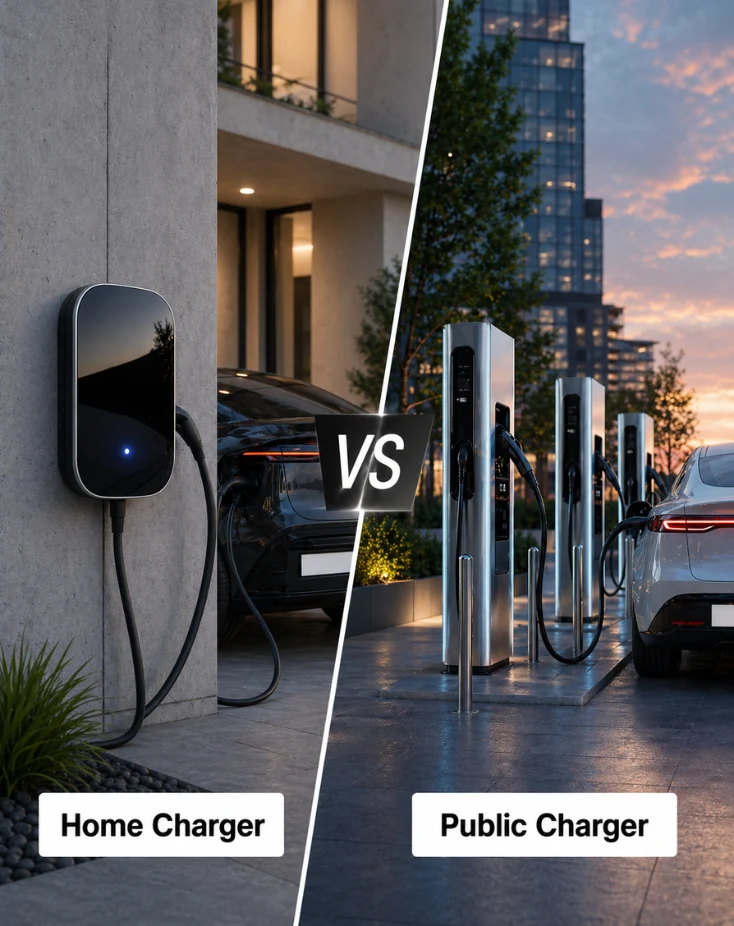
- Use AC charging for routine top ups.
AC home or workplace chargers are usually gentler on the battery than repeated DC fast charges. - Keep daily charge in a moderate band.
For normal use, many manufacturers suggest staying roughly between 20% and 80% most of the time, and reserving 100% charges for longer trips. - Avoid leaving the car at 0% or 100% for long periods.
Parking fully discharged or fully charged in high heat for days is harder on the battery. - Plan charging around your schedule.
If your car offers scheduled charging, set it so charging finishes near your typical departure time, especially on very hot days in the UAE.
These are not strict rules, but they give you a baseline that fits what many technical sources recommend for lithium-ion batteries in hot climates.
5. Cooling systems, cabin filters and air conditioning
In the UAE, air conditioning is essential. For an EV, the cooling system also plays a central role in battery and power electronics management.
Regular tasks include:
- Coolant checks:
Ask the workshop to inspect coolant level, leaks and pump operation annually. Some manufacturers also specify coolant replacement intervals for the battery or inverter system. - AC service:
Over time, refrigerant and the components that dry the system can degrade. Brands such as Tesla and others list specific intervals for AC service and desiccant bag changes. - Cabin air filter replacement:
Filters protect both your lungs and the HVAC system. Tesla, for example, recommends replacing cabin filters every 2–3 years depending on the model, with adjustments for harsher environments. In dusty parts of the UAE, many owners choose to replace them more often.
If you notice weak cooling, unusual smells or foggy windows that do not clear, mention it specifically at your next service appointment.
6. Software, diagnostics and over the air updates
Modern EVs are computers on wheels. Battery management, driver assistance, charging behaviour and even brake blending all depend on software.
Most major EV brands push software updates that:
- Refine energy management and range prediction
- Improve driver assistance performance
- Address known bugs or rare fault patterns
Good habits for owners:
- Install updates promptly when the car notifies you, ideally when parked and plugged in.
- Ask for a diagnostic scan during annual service, even if you do not see dashboard warnings. Some issues are stored as “soft” codes before they become visible alerts.
- Monitor driver assistance behaviour closely after windscreen replacement or suspension work. If a camera or radar needs calibration, you may notice warnings or performance changes.
If you are not comfortable interpreting update notes, ask your workshop to explain the main changes when you next visit.
7. 12 volt battery and general electrical checks
Even though the high voltage pack powers the drive motor, most EVs still rely on a 12 volt battery to boot up systems, run locks and support safety features. Many roadside callouts for EVs are due to 12 volt issues rather than traction battery failure.
At least once a year, you should:
- Request a 12 volt battery test as part of service.
- Ask for terminal cleaning if there are signs of corrosion.
- Confirm that all lights, wipers and safety systems operate normally.
If your car displays repeated low 12 volt warnings, do not ignore them. Replacing this battery at the right time is much cheaper than dealing with a non-starting car.
8. Bodywork, underbody and suspension
Roads in the UAE are generally good, but high speeds, speed bumps and occasional off pavement parking still affect the structure and suspension.
During scheduled service, a good EV workshop should:
- Inspect the underbody and battery protection plates for damage.
- Check suspension bushings, shock absorbers and springs for leaks, play or cracks.
- Look for corrosion on exposed metal components, especially near the coast.
If you have hit a deep pothole or kerb, mention it to the workshop so they can prioritize checks in that area.
9. Suggested maintenance rhythm for UAE EV owners
Every brand has its own schedule, and you must follow the official service plan to protect your warranty. That said, many expert guides propose a pattern like this as a simple baseline:
- Every 6 months or 10,000 km
- Tyre rotation
- Tyre and wheel inspection
- Visual underbody and suspension check
- Every 12 months
- Full diagnostic scan for fault codes
- Brake inspection and 12 volt battery test
- Cooling system and coolant level check
- Cabin filter inspection
- Software status review and update confirmations
- Every 24 months
- Brake fluid test and replacement if required
- Cabin filter replacement (or earlier in dusty areas)
- Longer intervals (as per manual)
- Specific coolant changes
- AC system service and desiccant replacement
- Detailed battery health report if requested
Use this as a conversation starter with your service advisor rather than a replacement for the official schedule.
10. Putting it all together for everyday use
The goal of electric car maintenance in the UAE is not to create a long to-do list. It is to protect three things:
- Safety – reliable brakes, tyres and steering
- Range and performance – a healthy battery and cooling system
- Resale value – a clean history of documented, sensible maintenance
You do not need to know every technical detail. If you:
- Follow the manufacturer’s schedule,
- Combine it with UAE specific habits for heat and dust, and
- Choose a workshop that understands EV systems,
you will already be ahead of most owners.
From there, you can fine tune based on how many kilometres you drive, how often you fast charge and whether you mostly use the car in city traffic or on highways between Emirates.