



%201.svg)
May 13, 2026

Category :
Buying Guide
China’s electrified SUV segment is growing at a breakneck pace, defined by a new generation of family-oriented plug-in hybrids and EVs. For buyers looking at practical, efficient, and tech-forward SUVs, it’s never been a more interesting time to compare options. Enter the Volkswagen Tiguan L ePro – a fresh contender from SAIC Volkswagen, positioned squarely against two of the segment’s strongest players, the BYD Song and Haval H6. For families or daily commuters, these vehicles are not just transport but daily partners. Understanding how the Tiguan L ePro stacks up is about more than specs. It’s a test of how global brands like Volkswagen can adapt to the demands of China’s advanced, value-driven market.In this article, we’ll break down what the Tiguan L ePro is, what makes its plug-in hybrid system tick, and where it looks to win over buyers. We’ll also compare it directly with the BYD Song and Haval H6 on range, size, usability, and what really matters for everyday drivers. If you’re looking at your next family SUV or weighing up hybrid options, this guide will help clarify whether Volkswagen’s latest has what it takes to compete.
What is the Volkswagen Tiguan L ePro?
The Volkswagen Tiguan L ePro is soon to hit the Chinese market as a plug-in hybrid SUV, produced by SAIC Volkswagen. It builds on the familiar Tiguan L,which is already a popular long-wheelbase SUV in China,by integrating plug-in hybrid technology aimed at buyers who want more efficiency without giving up versatility or brand reliability. This is not VW’s first foray into electrification in China, but it is arguably the most direct play at the heart of the fast-growing plug-in hybrid segment.The Tiguan L ePro features a 1.5-litre turbocharged petrol engine mated to an electric motor, allowing for both electric-only driving and extended range when the engine kicks in. While the formal launch date is not yet confirmed, signs point to the second half of 2024 for its public debut and market arrival. This timing places it directly in the crosshairs of buyers comparing established plug-in options during a peak SUV buying season.Powertrain and Real-World Range Explained
The Tiguan L ePro’s heart is a 1.5T plug-in hybrid setup. This means it houses a 1.5-litre turbocharged petrol engine with an electric motor and battery that can be recharged both by engine and external charging. The reported specs include a combined range of up to 1,423 km (most likely certified under China’s CLTC cycle, which tends to be optimistic) and a pure-electric range of 117 km,strong numbers on paper.What Does This Mean for Daily Use?
- Combined range: The headline 1,423 km figure refers to the maximum theoretical travel on a full battery and tank of fuel under standardised test conditions. For most drivers, expect real-world range to be lower, especially with air conditioning, local traffic, and highway speeds.
- Electric-only range: 117 km on battery power could cover daily commutes or errands for most urban drivers without ever engaging the petrol engine. For context, many PHEVs in this bracket offer 60-100 km electric range, so this figure is above average.
- Charging and efficiency: Details on charging speed, battery size, and fuel consumption are still to be confirmed. For now, the electric range promises solid usability for city living but will need fast charging to be truly convenient.
How Does Tiguan L ePro Compare With BYD Song and Haval H6?
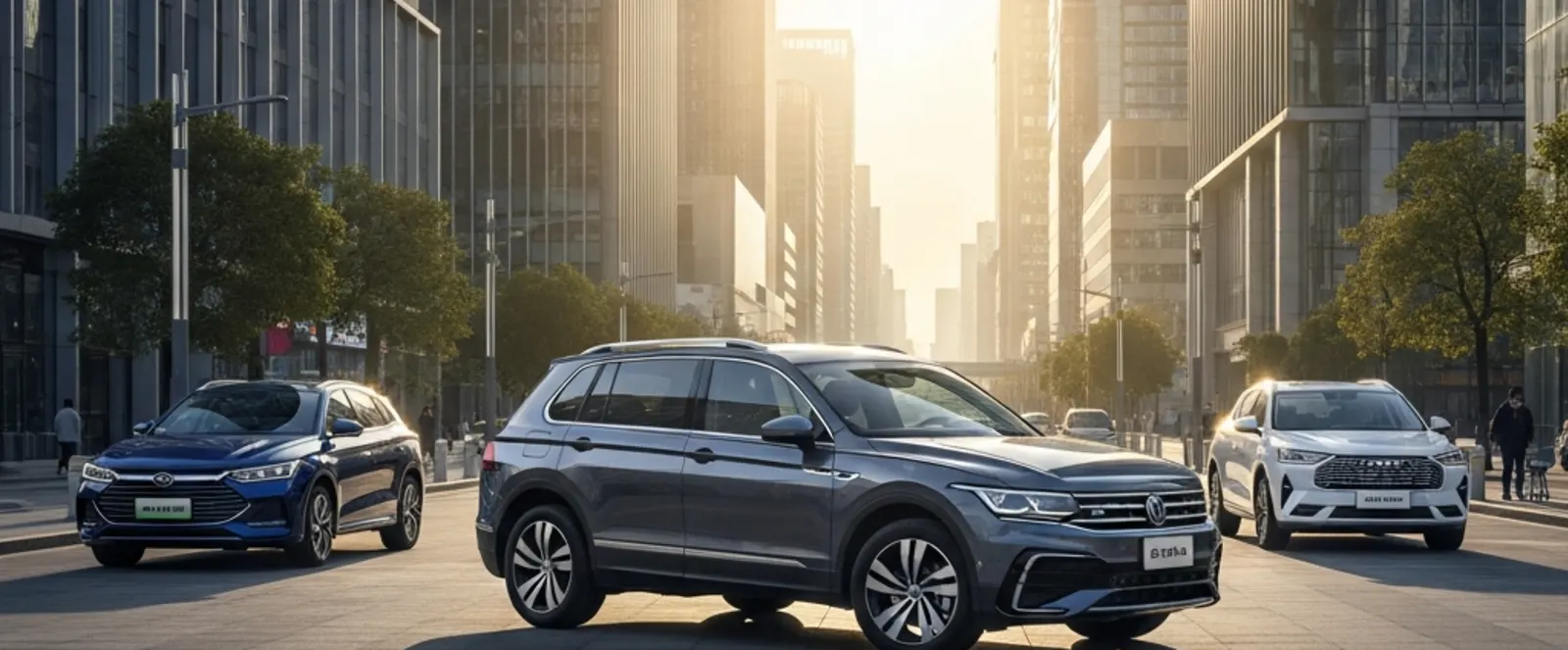
Competition in China’s PHEV SUV market is fierce, and the BYD Song (especially the Song Plus DM-i) and Haval H6 (including its hybrid and plug-in versions) are household choices. Here’s how the Tiguan L ePro measures up.Range and Powertrain Comparison
- BYD Song Plus DM-i: Offers a plug-in hybrid system with up to 110 km electric range (depending on version) and strong fuel efficiency. Known for smooth EV transitions and cutting-edge hybrid tech.
- Haval H6 PHEV: Usually claims around 110 km of electric range and a combined range above 1,100 km, solid but not class-leading.
- Volkswagen Tiguan L ePro: With its headline 117 km electric and 1,423 km combined range, the new Tiguan looks competitive on paper, even edging ahead in electric-only driving.
Size, Cabin Space, and Practicality
- All three models target the mid-size family SUV segment, with seating for five and flexible cargo areas. Dimensions for the Tiguan L ePro are likely similar to the regular Tiguan L, offering generous rear legroom (a common Chinese market request).
- Volkswagen’s finishing tends to emphasise clean design, material quality, and intuitive controls, but recent Chinese rivals have rapidly closed the gap on tech and fit.
- For luggage and daily usability, each vehicle accommodates family needs, but final numbers (boot capacity, folding seat setup) could differentiate them.
Brand Appeal and Buyer Perception
- Volkswagen: Long-established in China, viewed as reliable and conservative, but pressed to modernise as buyers embrace newer tech from local brands.
- BYD: Associated with innovation, rapid rollout of new tech, and a home-market advantage. Its Song models are now recognised for both value and performance.
- Haval: Strong sales and mainstream appeal, focused on offering value-driven comfort and practical features.
What Matters Most to Family SUV Buyers?
When families or daily drivers look for a PHEV SUV, several factors rise to the top beyond powertrain stats.- Electric range for daily commuting: Most urban owners want to drive on electric power for routine journeys, keeping costs down and air quality up. The Tiguan L ePro’s claimed 117 km suits this use well.
- Long-distance confidence: The combined range of over 1,400 km can reduce range anxiety for holiday trips or intercity driving, but real-world mileage is always lower and depends on load, AC, and route.
- Cabin space and comfort: All three contenders offer spacious interiors, but seat comfort, climate control, rear-seat amenities, and boot flexibility distinguish a true family SUV.
- Tech and convenience: Infotainment systems, digital displays, smart air conditioning, and mobile app integration are rapidly becoming must-haves. Volkswagen will need to match the slick user interfaces of the BYD Song and Haval H6 to win tech-focused buyers.
- Support and service networks: Volkswagen’s after-sales network is mature in China, but local rivals have also expanded fast. For hybrid and electric tech, prompt service and clear communication add confidence.

.webp)