



%201.svg)

Global shocks and regional conflicts don’t just make headlines, for car owners in the UAE, they can track all the way from the news to your next service bill. As shipping routes shift and freight gets delayed, the supply chains car owners rely on suddenly feel much closer to home. Whether you drive an electric vehicle or a petrol car, you might wonder: who’s really more at risk when imported parts, batteries, or even fuel supplies are shaken by turmoil abroad? This article draws on real world UAE ownership: not just theory, but what drivers, workshops, and service specialists actually face when delays and shortages hit. You’ll get an honest look at which types of parts are most exposed, how those risks play out day to day, and what you can do now to reduce disruption, whether you power your drive with kilowatts or octane.
Will shipping disruption affect EVs and petrol cars equally?
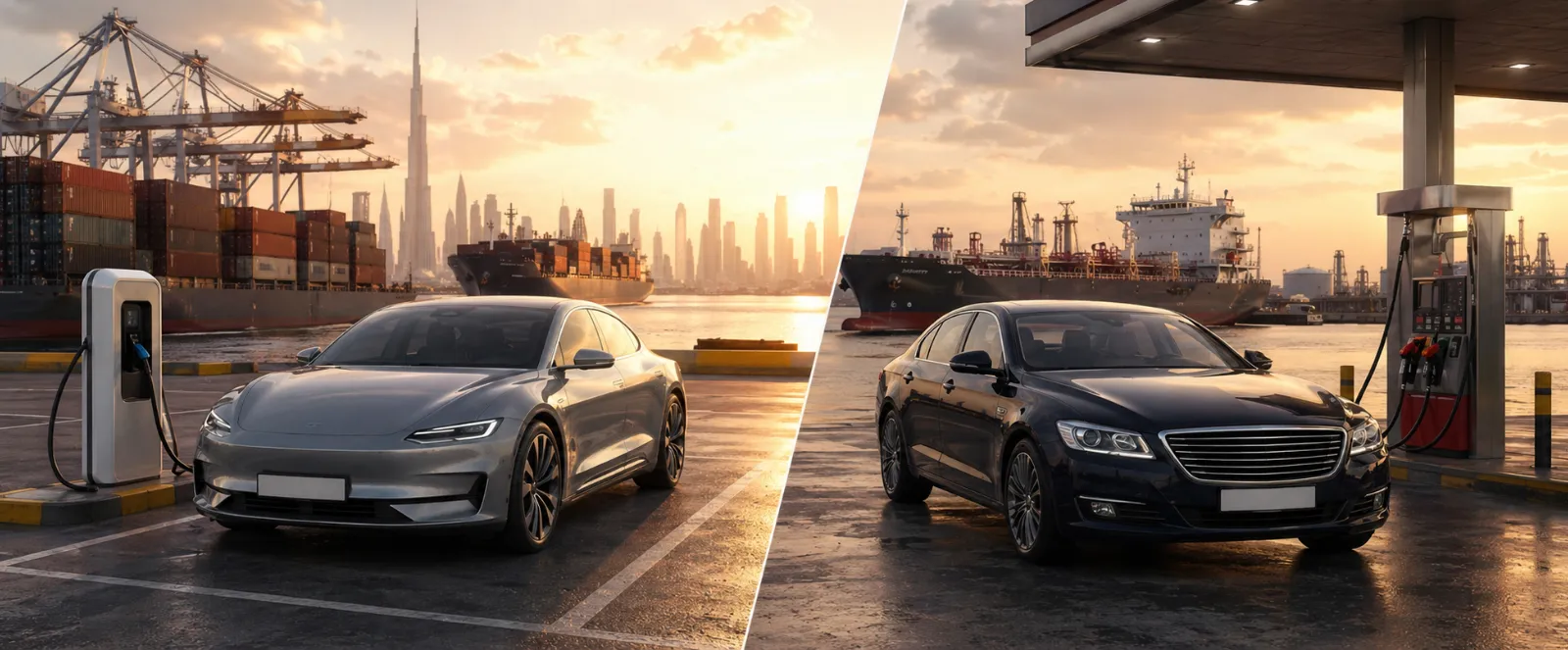
Shipping disruption, especially from conflict in major shipping lanes, impacts both electric and petrol cars, but not in the same way. While it’s tempting to think one is always riskier, the kinds of disruption that sting each owner can be very different.
Why the risks are different, not higher for every vehicle
For EVs, the greatest threat comes from delayed or more expensive imported parts: large battery packs, charging modules, electronic controllers, and sometimes basic accessories. These items often have fewer in-country substitutes and depend on manufacturers' global supply links, many of which run through vulnerable ports or air freight routes. Petrol cars, on the other hand, have wider exposure through fuel price swings and a huge demand for engine-related consumables. While basic maintenance parts might seem easier to source, much of what keeps a petrol car running, from fuel injectors to transmission sensors, still relies on imported stock, and regular servicing creates a constant pull on spares.
How conflict disrupts parts, shipping routes, and landed costs
Recent turmoil along the Red Sea, in the Suez Canal, and surrounding shipping corridors has already created major headaches for auto parts suppliers. Rerouted ships take longer, containers stack up, and freight costs climb. Critical items can sit at port or in transit for weeks beyond their scheduled arrival. These delays quickly filter through to workshops and body shops in Dubai and Abu Dhabi, hitting both EV and petrol car owners, but often at different pain points.
Which EV parts are most exposed to shipping delays?
Certain EV components are particularly vulnerable if global shipping falters, and drivers should know where their greatest risks lie.
Battery packs, cells, and thermal management parts
Batteries are the heart of an electric vehicle and also its biggest logistical hazard. Most high-voltage battery packs (and their individual cells) are built in East Asia or Europe, then imported fully assembled. If routes are blocked or delayed, local workshops may not have backup stock, and lead times can stretch from weeks to many months for rarer models. In hot climates like the UAE, thermal management systems, cooling plates, pumps, or sensors that keep batteries safe in extreme heat, are also often shipped in specially regulated containers.
Power electronics, sensors, and control modules
EVs run on sophisticated power electronics. Things like inverters, control units, and sensor modules are specialised components that can be hard to substitute or source locally. An ABS module failure or a missing sensor can mean a car is undriveable until a replacement arrives on the next available shipment. Global chip shortages have already shown how even small electronic parts can halt repairs for weeks at a time.
Charging hardware and imported accessories
Wallboxes, charge cables, and even onboard charging hardware for the car itself are nearly all imported into the UAE. Delays here can set back home charger installations, public infrastructure expansions, or even leave your car stuck if a key part fails. Accessories like software-update dongles, which are sometimes required for advanced troubleshooting, are subject to the same pressures.
Why petrol cars can still be highly vulnerable
It’s a common misconception that only new technology faces risky supply chains. Petrol car owners are not immune. In fact, some elements leave them just as exposed, and sometimes more so.
Fuel price exposure during regional instability
While the UAE benefits from strong domestic fuel production, pump prices are still closely linked to global markers. When conflict squeezes major oil shipping lanes, the cost of petrol can jump significantly and quickly, showing up in monthly running expenses for drivers. Shortages are rare locally, but price volatility can cause ongoing stress, and unlike an EV, you can’t switch to another energy source.
Engine, transmission, and emissions parts with import dependency
Modern petrol cars rely on a web of imported components, particularly for powertrains and increasingly complex emissions systems. Turbochargers, sensors, catalytic converters, and electronic control units all feed through the same vulnerable supply roads. If these aren’t on the shelf, repairs, especially for newer engines, are on hold just as surely as for EVs.
Consumables such as lubricants, filters, and maintenance items
Even basic maintenance needs, oil, filters, coolant, and brake parts, depend on regular imports. Any hiccup in scheduled arrivals can see prices creep up or shelves thin out, especially with the scale of the UAE’s active car parc. Fast fit centres and quick-service outlets rely on steady flows of these consumables, and disruption downstream can quickly cascade into longer lead times for routine work.
How UAE drivers may feel the impact in daily ownership
Shipping delays and trade tensions aren’t just headlines. For drivers, they play out in ways that shape your experience of ownership, sometimes abruptly. Here’s what that can look like:
- Longer repair times from parts backorders: If a diagnosis reveals a failed battery module or a rare engine part, your car could sit waiting for weeks if the next shipment is delayed. This is especially true for less common models.
- Higher running costs from fuel or imported components: Petrol price spikes hit wallet and fleet budgets directly. For EVs, delayed or pricier parts can claw back some of the running-cost savings many owners expect.
- Insurance and resale pressure: Longer time off the road increases the cost of courtesy cars and can complicate insurance claims. A vehicle known for frequent or lengthy parts waits may also lose more value at resale.
- Service booking delays: If workshops are chasing backordered parts or juggling resource shortages, you might wait longer for a booking, prolonging routine maintenance or urgent repairs.
Which vehicle type may be more resilient in real conditions?
The answer isn’t black and white. Both types come with strengths and exposures, and what matters most is often the specific model and its local support, not just drivetrain.
When EV ownership is less exposed
If you own a popular EV model that’s widely supported in the UAE, with parts held in-country by dealers or independent specialists, your exposure to long shipping delays drops sharply. Fewer moving parts mean fewer things to go wrong, and running costs are insulated from global oil price shocks. EVs that share battery designs or components with multiple brands (like some models from VW Group or BYD) may have shorter wait times if local stock is well managed.
When petrol ownership is less exposed
On the petrol side, cars supported by strong dealer networks with well-stocked warehouses are often robust against most delays. Widely used models, think Toyota, Nissan, Honda, can often rely on substantial regional inventories, so basic repairs can be turned around even if new imports are slowed. Short-term fuel price spikes can sting, but owners won’t be left stranded by a missing battery or power electronics shipment.
Why model availability and dealer support matter more than drivetrain alone
Ultimately, the resilience of any car in disruptive times comes down to support on the ground. Models that are rare, newly launched, or sold in low volume are more exposed whatever their fuel type. Strong regional dealer support and accessible independent service can sometimes matter more than whether a car is electric or petrol-driven.
How to reduce disruption risk before you buy or service a car
Thinking ahead can make a real difference in staying mobile and keeping costs under control, even when headlines change. Here are some practical ways UAE drivers can lower their exposure:
- Check local parts stock and service network depth: Before buying a car, EV or petrol , ask about parts held locally and average lead times for core items. Dealerships, independent garages, and specialist service centres vary widely in their preparedness.
- Choose models with common components and strong regional support: Prioritise vehicles that share key components with others on UAE roads, boosting your odds of quick fixes if parts are needed. Local popularity isn’t just about taste , it’s about stock on the shelf.
- Plan maintenance and replacement parts earlier: Don’t wait for a part to fail before placing an order or a service booking. Preventive checks, proactive component replacements, and early scheduling go a long way to smoothing out bumps in the supply chain. If a disruption is forecast or already starting, getting ahead of trends will serve you well.
Conclusion
Shipping disruption is becoming part of the backdrop for every UAE driver, whether you plug in or fill up. The risks each ownership model faces differ in detail, but not in seriousness. Popular, well-supported EVs can offer more stability on price and fewer moving parts, but specialist components bring their own delays if stock runs low. Petrol cars may weather some supply-chain storms better, especially if fuel keeps flowing and the right spares are close at hand, but are sharply exposed to swings in global fuel prices. The most resilient ownership? It’s the one with the right local support, proper parts stock, and planned maintenance, whatever badge is on the bonnet. In uncertain times, informed choices make all the difference.
.webp)