



%201.svg)

Owning an electric vehicle (EV) in Dubai has never looked more appealing, especially with a growing range of models, government incentives, and a clear shift towards sustainable transport. Yet, for many potential buyers, one major factor stands between them and a smooth transition to electric: whether it’s actually practical to own an EV while living in an apartment block. If you’re an apartment resident, perhaps in Downtown, Marina, JVC, or anywhere else in Dubai, this question matters more than most. Charging access, building permissions, and parking setups are not just minor details,they can make or break your EV ownership experience. This guide unpacks the real issues you’ll face, what to check ahead of time, and the most common sticking points Dubai apartment residents must resolve before buying an electric car.
Can You Charge an EV From Your Dubai Apartment Parking Space?
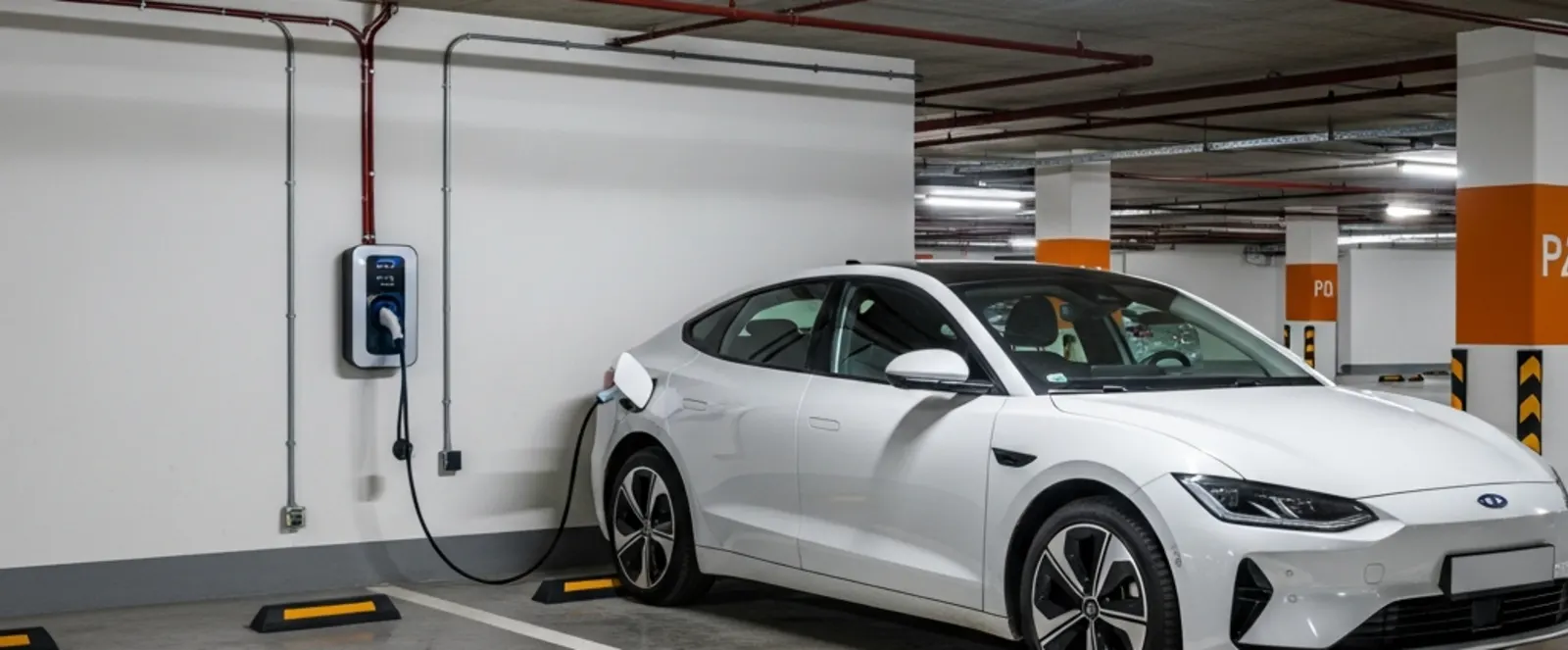
The ability to regularly charge your electric vehicle at home is a top factor in enjoyable, stress-free ownership. In Dubai apartments, home charging is often a complex puzzle. The simplest scenario is when you have a dedicated, assigned parking space in the building’s residential parking. If that space is close to suitable electrical access (ideally a wall or pillar with an existing power point nearby), installing an EV charger can sometimes be straightforward, provided your building allows it.
Assigned Parking vs Shared Parking
Some apartment buildings allocate a fixed bay to every resident. This makes home charging more practical. If you have an assigned space, check:
- The exact location: Is it right near a power source or main pillar?
- The ease of running a cable or wiring from the power supply to your bay
- Whether neighbouring cars (or building structure) would block access to a charger
If your building uses shared, first-come-first-served parking, home charging likely isn’t feasible, as you can’t guarantee being able to park near your charger each night.
Parking Layout: Valet, Podium, and Basements
Podium and basement layouts with fixed resident bays are usually the most EV-friendly, as many have accessible electrical panels along the periphery. Buildings with valet parking or only surface-level parking can be much more challenging, as you often can’t install a charger and may have little control over which space you get.
Proximity to Power
Running long, exposed cables across pillars or shared access routes is typically not allowed for both safety and appearance reasons. Ideally, your spot should be within a few metres of an existing power supply,otherwise, building management may simply decline your request.
What to Ask Your Building Before You Buy
Even if your parking bay looks ideal, actual approval depends on your building’s policies and permissions. Before signing anything for your new EV, clarify the following with:
- Your landlord (if renting)
- Building management (often a facilities or owners association in Dubai)
- The property developer (especially in newer towers or larger communities)
Ask these critical questions:
- Does the building currently allow residents to install EV chargers in their parking bays?
- Have any chargers been installed before, or are there plans to add shared charging stations for residents?
- Who exactly signs off on EV charger installations: is it the landlord, a management company, or does it need developer approval?
- Are there any technical restrictions, preferred vendors, or required contractors?
- What documentation or procedures must you follow (drawings, site checks, insurance changes)?
- Will chargers be removed or left behind if you move out?
In many newer buildings, residents are now seeing more flexibility. However, some older towers have written policies against any electrical work or have not yet seen a request for EV charging. Getting all approvals in writing is vital to avoid disputes later.
DEWA Meter, Electrical Setups, and Why Site Checks Matter
Most EV home chargers in Dubai draw significant current, and not every apartment parking is ready for this demand.
When a Dedicated Meter May Be Needed
Some high-rise buildings allow residents to connect their charger to their apartment’s main DEWA electricity meter. Others require a separate DEWA meter installed exclusively for EV charging in the parking area. This is more likely if charging is located far from your unit, or if electrical loads are a concern.
How Electricity Billing is Handled
If the charger ties into your apartment meter, billing is simple: your monthly DEWA bill includes your car charging usage. With a separate meter, you’ll get a second DEWA statement, sometimes based on a separate rate. Clarify how the costs will be tracked and who is liable for them,landlord, tenant, or divided another way.
Technical Approvals and Site Inspections
Before any installation, expect building management or an appointed contractor to inspect your parking bay. They’ll check circuit capacities, load limits, and whether installation is technically safe and viable. Do not commit to an EV until you or your installer confirm a safe, approved charger connection is possible in your exact bay, not just elsewhere in the building.
Will Public Charging Near Your Apartment Be Enough?
For many apartment dwellers, private home charging just isn’t possible,either due to building rules, parking layouts, or technical barriers. The natural next question: can you live comfortably using Dubai’s public charging network?
Mapping Public Chargers
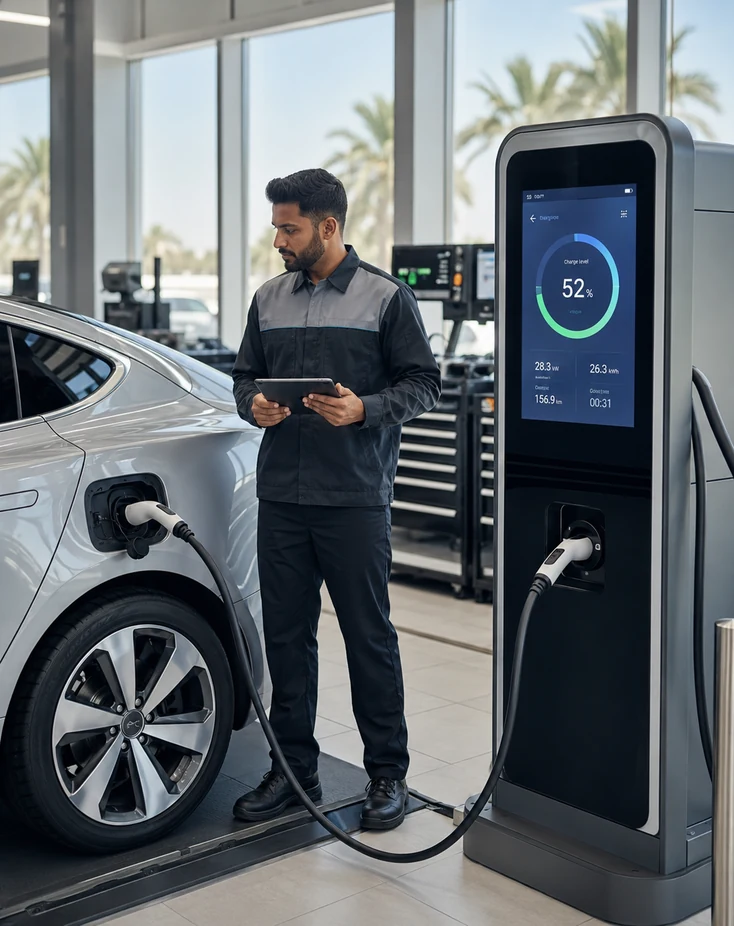
Dubai has invested heavily in public EV charging stations, with DEWA’s Green Charger network being the most prominent. Still, charger density varies. Before buying an EV, search the areas around your building, workplace, and typical day-to-day routes for available chargers using apps or map tools. Remember:
- Proximity: Is there a charger within easy walking distance of your building?
- Charger type: Are they slow AC chargers (6-7 kW), or faster DC rapid chargers (43 kW and above)?
- Access hours: Are chargers available 24/7, or only during mall/car park opening hours?
- Reliability: Are they often occupied, regularly maintained, and compatible with your intended EV?
Backup Planning for Public Charging
Even with a nearby public charger, busy weekends or public holidays can mean queues or broken chargers. If you can’t guarantee a charger will be free when you need it, or if parking around the charger is limited, relying on public infrastructure may become a daily headache rather than a convenience.
How Charging Time Fits with Dubai Apartment Living
Charging speeds and parking habits make a big difference. Most common public AC chargers add about 30-40 km of range per hour on modern EVs, meaning a full charge can take 6-8 hours or more. DC chargers are much faster, but less common,particularly in residential neighbourhoods.
Estimating Your Weekly Charging Needs
Work out your average daily distance (for most Dubai commutes, this ranges from 20-50 km). Multiply this by your typical week. Will you need to charge every night, or just every few days? If you can only use public chargers, you may need to leave the car during the day, or overnight, depending on charger rules.
Battery Size and Your Experience
EVs with larger batteries (some premium brands offer 70 kWh or more) may only need to be charged once or twice a week, but require a longer uninterrupted charging session. Smaller battery models may top up more often, but require less time per session. If your parking or building limits how long your car can be left at a charger, this directly affects which EV suits your situation.
Situations Where Apartment EV Ownership Works (and Doesn’t)
In practice, the best-case scenario for apartment EV owners in Dubai looks like this:
- You have an assigned indoor parking spot within 1-2 metres of a power supply
- Building management or the landlord has approved the installation of an EV charger
- DEWA or a contractor has confirmed technical suitability
- You have access to a separate or shared DEWA meter, with clear billing
- Public chargers are available nearby for backup
Problem scenarios include:
- Parking is shared or remote from power
- Management refuses or defers charger installation requests
- No public chargers are available within walking distance
- Your driving exceeds what public charging can conveniently support
- Installation would require extensive, non-approved electrical work
When these obstacles exist, hybrid vehicles or waiting until infrastructure or policies change may be a more practical choice.
A Pre-Purchase Checklist for Dubai Apartment Residents
Before you commit to an EV purchase while living in a Dubai apartment, make sure you have:
- Identified your exact parking bay and confirmed its power access
- Written permission from your building management or landlord for charger installation
- Understood DEWA meter arrangements and who will pay for installation and monthly charging
- Mapped all public charging stations within reach of your home and regular routes
- Worked out your weekly driving needs versus available charging time and speed
- A backup charging plan if your primary option is unavailable
If possible, visit other EV owners in your building to see how they use and charge their cars. Speak directly to management and your installer before placing a deposit, and always make sure documentation is complete.
Conclusion: Making an Informed Decision
Apartment-living in Dubai does not rule out EV ownership, but it makes real-world research and upfront checks absolutely essential. The convenience and savings associated with electric cars often hinge on reliable, accessible charging,and in apartments, this varies dramatically from one building to the next.The best advice is to look beyond the car itself. Focus on your parking, your building’s attitude, technical requirements, available infrastructure, and your actual weekly driving life. With the right checks, EV ownership from a Dubai apartment can be rewarding. Skip them, and you may be in for a frustrating ownership experience you could have avoided.

.webp)