



.webp)
%201.svg)

Electric cars are easy to understand when charging fits neatly into daily life. Plug in at home, leave the car overnight, and start the next morning with enough range. For many drivers, that is enough.
But the UAE is different from some other EV markets. Many people live in apartment towers where home charging is not always simple. Some drivers travel often between Dubai, Abu Dhabi, Sharjah, Al Ain, and the Northern Emirates. Summer heat also changes how people feel about waiting beside a charger or planning longer stops during the day.
That is why NIO in the UAE is worth looking at closely. Battery swap may sound like a premium comfort feature at first, but in this market, it could solve a practical problem.
What battery swap actually means
Battery swap is simple from the driver’s side. Instead of plugging the car into a charger, the driver enters a swap station. The car’s depleted battery is removed and replaced with a charged one.
NIO opened its first UAE Power Swap Station at Yas Island in Abu Dhabi in 2025. The company says the swap can take as little as three minutes. That is much closer to a quick fuel stop than a normal charging session.
Here’s how it works: charging fills the same battery with electricity, while swapping gives the car a different battery that has already been charged. The driver does not wait for the energy to flow into the battery. The station has already done that work.
Why this matters in the UAE
The UAE is a car-focused country. Roads are wide, cities are spread out, and many people drive long distances for work, family, shopping, airport trips, and weekend plans.
EV charging is improving across the country, but charging still needs time and planning. A driver may ask whether a charger is available, whether it is fast enough, and whether there is enough time to wait. For apartment residents, the question may be even simpler: where can the car be charged regularly?
Battery swap could help because it reduces the need to plan every charging stop. It is not just about speed. It is about certainty.
In real life, it looks like this: a driver leaves Dubai in the morning, spends the day in Abu Dhabi, stops near Yas Island, swaps the battery, and drives back without waiting around for a fast charger. That kind of convenience matters when the day is already full.
The main benefit is time
A three-minute battery swap sounds like a luxury because it saves time. But time is not only a luxury. For many drivers, it affects work, family routines, and daily stress.
This can help if:
- A driver cannot charge at home and needs a quick, reliable way to keep the car ready during the week. This is especially useful for people in towers or shared parking areas where installing a charger may not be possible.
- A car is used for long daily trips between emirates, where waiting at a public charger can interrupt the whole schedule. A fast battery swap makes more sense when the car needs to get back on the road quickly.
- The vehicle is used for business, such as airport transfers, chauffeur services, or corporate travel. In those cases, every long charging stop can reduce the time the vehicle is available for work.
For someone who charges overnight at home, battery swap may not be used often. For a high-mileage driver, it could become one of the main reasons to choose the car.
Heat makes convenience more important
The UAE’s climate also makes battery swap more interesting. EVs can work well in hot weather, but heat can affect the driving and charging experience. Air conditioning uses energy, parked cars can become extremely hot, and fast charging may be managed carefully by the car to protect the battery.
Battery swap does not remove every heat-related issue. Batteries still need proper cooling, storage, charging, and monitoring. But a managed swap station can look after batteries in a controlled way. That may feel more reassuring than relying only on public fast charging during the hottest months.
This also matters for long-term ownership. Many EV buyers worry about battery health, even when warranties are strong. If the battery is part of a managed swap system, the driver may feel less tied to one specific battery pack for the full life of the car.
It will not replace normal charging
Battery swap should not be seen as the end of regular EV charging. Most EV drivers will still need a mix of charging options.
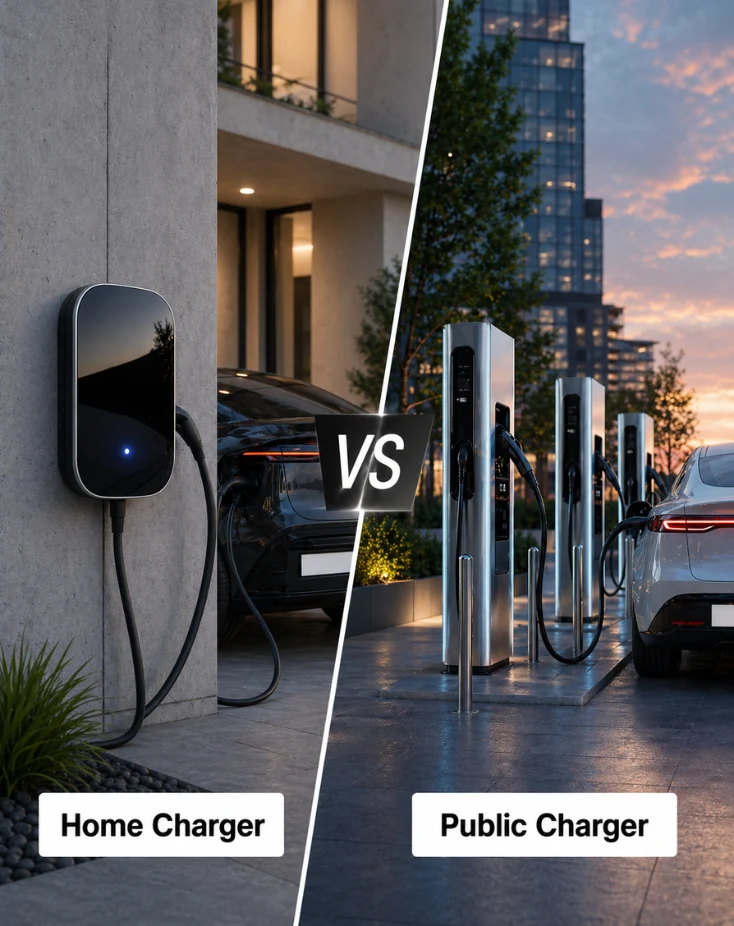
Home charging will remain the easiest choice for people with private parking. Workplace charging can help employees top up during the day. Public chargers are useful at malls, hotels, offices, and along main roads. Battery swap simply adds another option for drivers who need speed and certainty.
A simple way to think about it is this: normal charging works best when the car is already parked for a while. Battery swap works best when the driver needs to continue quickly.
That is why the two systems can work together. The UAE does not need only one solution. It needs different solutions for different driving habits.
Why fleets may care more than private drivers
Private buyers may see battery swap as convenient. Fleets may see it as a business tool.
For a chauffeur company, airport transfer service, or premium taxi-style operation, vehicle downtime matters. If a car spends 40 minutes charging during a busy day, it is not earning money. If it can swap a battery in a few minutes, the business can keep it moving.
This could be useful for:
- Corporate fleets that want electric vehicles but still need predictable daily use. Battery swap can reduce the worry that several cars will be waiting for chargers at the same time.
- Airport and hotel transport services where timing is important. A short energy stop is easier to manage between bookings than a longer charging session.
- High-mileage operators that care about uptime and battery condition. A managed battery system may make costs and maintenance easier to plan.
The numbers still need to make sense. Vehicle price, subscription costs, station access, insurance, and servicing all matter. But the business logic is clear: the more a vehicle is used, the more valuable quick energy replacement becomes.
The limits are real
Battery swap is not magic. It needs expensive infrastructure, enough batteries, reliable stations, and enough compatible cars on the road.
The biggest challenge is coverage. One station is useful for early users, but a real network needs locations where people actually drive. Abu Dhabi, Dubai, key motorway routes, and busy commercial areas would all matter.
There is also the question of brand compatibility. If only NIO cars can use NIO swap stations, the system depends heavily on how many NIO vehicles are sold in the region. Public chargers can serve many EV brands, but swap stations are usually tied to a specific battery design.
Pricing is another key point. Drivers will compare battery swap costs with home charging, public charging, petrol costs, and the overall cost of owning the car. If the service is too expensive or confusing, the convenience may not be enough.
What UAE buyers should consider
Battery swap will not matter equally to everyone. The right question is not whether the technology is impressive. The better question is whether it fits the driver’s normal week.
Before choosing an EV with battery swap, a UAE buyer should think about daily life:
- Where is the car parked most nights, and is home charging realistic? If reliable home charging is already available, battery swap may be helpful but not essential.
- How often does the car travel between emirates or cover long distances in one day? The more unpredictable the driving pattern, the more valuable a quick swap network becomes.
- Are swap stations located near regular routes, not just popular destinations? Convenience only matters if the station is close enough to use without a major detour.
- Is the pricing clear and easy to understand? A fast service can still become frustrating if the monthly costs, usage terms, or battery rules are unclear.
For some drivers, NIO’s battery swap will be a strong reason to consider the brand. For others, a standard EV with good home charging may be the more practical choice.
More than a premium extra
NIO’s battery swap idea fits the UAE because it speaks to how people actually use cars here. Drivers value convenience, but they also value certainty. They want to know that an electric car can handle busy days, long routes, heat, and last-minute plans without becoming a planning exercise.
Battery swap could be more than a luxury feature because it solves a real problem: charging time and charging confidence. It will not replace normal charging, and it will not suit every buyer. Its success will depend on station coverage, clear pricing, strong service, and enough drivers using the system.
For now, the idea is worth watching. If NIO can build a useful swap network across the UAE, battery swap could become one of the most practical reasons for some drivers to move to an electric car.