



%201.svg)

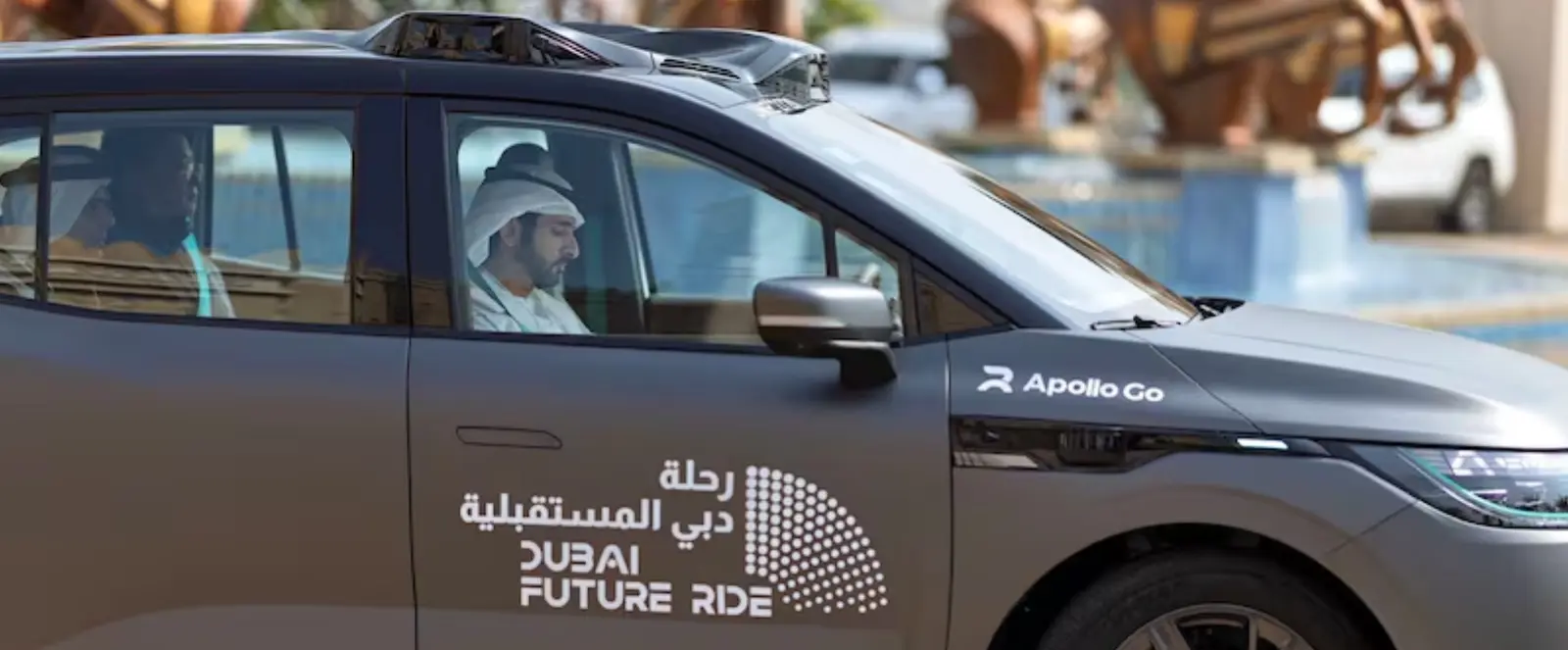
When Sheikh Hamdan tested Dubai’s new self-driving taxi, most people focused on the futuristic image: a car moving through the city without a human driver behind the wheel. It looked like something from a concept video about the future of cities.
But if you look beyond the photo moment, something more important is happening.
Dubai has officially begun operating fully autonomous electric taxis as part of its long-term mobility strategy. These are not experimental prototypes locked inside a lab. They are electric vehicles built for real-world public transport use. That combination, autonomy plus electrification, tells you exactly where the UAE is heading.
For EV owners and for the wider automotive industry, this is not just a technology story. It is a signal about infrastructure, service standards, battery performance in extreme heat, and how serious the region is about scaling electric mobility.
Let’s unpack what this actually means.
Yes, the self-driving taxi is fully electric
The autonomous taxis being introduced in Dubai operate on fully electric platforms. That decision is not accidental.
Autonomous technology requires massive computing power, multiple sensors, cameras, radar systems, and constant data processing. Electric vehicle platforms are already designed around high-voltage architecture and digital control systems. Integrating autonomous systems into EV platforms is simply more practical and more efficient than adapting traditional petrol-powered vehicles.
There is also a sustainability angle. Dubai’s broader transport strategy includes emissions reduction and smarter energy use. Launching autonomous vehicles that still burn fuel would not align with long-term sustainability goals. Electrification and autonomy are developing together because they support the same long-term vision.
This matters because it confirms that EVs are not a temporary trend in the UAE. They are part of national infrastructure planning.
Why electric vehicles make more sense for autonomous fleets
There are several practical reasons why most global autonomous taxi programs rely on electric vehicles rather than internal combustion engines.
First, electric vehicles have fewer moving parts. There is no engine oil system, no exhaust system, no traditional gearbox, and fewer mechanical wear components overall. For a fleet vehicle that may operate many hours per day, mechanical simplicity translates into reduced maintenance downtime.
Second, electric vehicles are software-driven at their core. Modern EVs are already designed as centralized computing platforms managing power distribution, battery management, thermal systems, and performance logic. Adding autonomous driving layers on top of that digital architecture is far more seamless than retrofitting complex petrol systems.
Third, operating cost matters. Autonomous taxi fleets must run efficiently to justify their investment. Electric vehicles typically offer lower per-kilometer operating costs compared to fuel-powered vehicles, especially when they are used intensively. Over thousands of kilometers per month, those cost differences become significant.
In simple terms, EVs are the natural foundation for autonomous fleets.
What this means for charging infrastructure in Dubai
Introducing a few electric vehicles into a city is relatively simple. Introducing a large fleet that operates daily is a completely different challenge.
Autonomous taxis cannot afford unpredictable charging downtime. Every minute off the road affects availability and efficiency. That means charging infrastructure for these vehicles must be:
- Fast and reliable
- Strategically located
- Monitored continuously
- Designed for high utilization
Fleet charging differs from home charging. A private owner may charge overnight at home and occasionally use public DC fast chargers. A robotaxi may need to charge multiple times per day, potentially under high heat conditions, and often during peak electricity demand periods.
This pushes infrastructure development forward. More reliable DC charging hubs, better load management systems, and smarter grid coordination become essential.
The indirect benefit for private EV owners is obvious. As the system improves to support fleets, public charging reliability improves as well. Infrastructure investment driven by commercial fleets often accelerates improvements for everyone.
Heat and high utilization: the UAE challenge
Dubai’s climate introduces a variable that many global markets do not face at the same intensity: extreme heat.
Electric vehicles are designed with advanced thermal management systems. Battery packs are cooled or heated depending on operating conditions to maintain optimal performance and safety. However, when vehicles operate continuously in high ambient temperatures, the cooling systems work harder.
Now imagine an autonomous taxi that:
- Operates for extended hours
- Runs frequent AC for passenger comfort
- Fast charges multiple times per day
- Stays exposed to direct sunlight
Thermal management becomes critical. Battery temperature affects charging speed, performance output, and long-term battery health. If temperatures exceed optimal thresholds, the system reduces charging rates or limits power output to protect itself.
For fleet operators, this requires careful planning and monitoring. For the broader EV ecosystem, it means developing deeper expertise in battery diagnostics and thermal system maintenance.
This is where proper EV servicing standards become essential. High-mileage electric fleets generate real-world data about how batteries and cooling systems behave under UAE conditions. That knowledge will eventually influence service practices for privately owned EVs as well.
Autonomous taxis and EV adoption
There is also a behavioral impact to consider.
Many residents remain curious about EVs but hesitant to commit to ownership. Concerns about charging, battery life, and performance in heat still exist.
Autonomous electric taxis create an entry point. A person who rides in one experiences electric mobility without ownership risk. They notice the smooth acceleration, the absence of engine noise, and the difference in urban driving comfort.
That exposure reduces psychological barriers.
When adoption increases, demand for independent EV service specialists increases as well. More vehicles on the road mean more battery health checks, more charging troubleshooting, more software diagnostics, and more thermal system maintenance.
Autonomous fleets may accelerate consumer acceptance faster than traditional marketing ever could.
The technical standards behind autonomous EV fleets
Autonomous fleets cannot operate on guesswork. They rely on strict technical standards and structured maintenance systems.
For example, predictive diagnostics become important. If a vehicle detects abnormal battery cooling behavior, it must flag that issue before it leads to failure. If charging communication fails intermittently, the system must log and analyze that data.
This level of monitoring sets a benchmark. Over time, the expectation of precision rises across the industry. EV owners begin to expect structured diagnostics rather than “trial and error” repairs.
The long-term impact is higher technical discipline across EV servicing in the region.
Will autonomous taxis replace traditional taxis?
Not immediately. Rollouts happen gradually and under controlled conditions.
Autonomous vehicles operate within approved zones, under monitoring systems, and often with phased deployment strategies. Safety validation is continuous.
Human-driven taxis will remain part of the system for years to come. However, the direction is clear: autonomy will expand as infrastructure, regulation, and public trust grow.
For EV professionals and workshops, the key takeaway is that autonomy increases the importance of digital diagnostics and system integration skills.
The broader mobility vision
Dubai’s transport strategy includes ambitious goals for autonomous mobility. The integration of electric autonomous taxis aligns with that roadmap.
This is not a temporary experiment. It is part of a structured plan to create:
- Cleaner transport systems
- Smarter traffic management
- Reduced congestion
- Lower emissions
Electric vehicles are central to this plan. Autonomy improves efficiency, but electrification ensures sustainability.
When both technologies grow together, cities change in measurable ways.
What this means for EV service and expertise in the UAE
As EV fleets scale, the need for high-level technical knowledge grows.
Battery systems require accurate diagnostics. Charging systems require fault tracing. Thermal management must be understood in detail. Software updates and system calibration become routine tasks.
Autonomous fleets demand precision. That precision gradually becomes the industry expectation.
For private EV owners, this means the region’s EV ecosystem will continue to mature. Access to advanced tools, structured repair workflows, and high-voltage expertise becomes more common.
The presence of autonomous electric taxis is therefore not just a mobility story. It is a signal that EV infrastructure, expertise, and technical standards are evolving rapidly in the UAE.
Final perspective
Sheikh Hamdan’s ride in a self-driving electric taxi symbolized technological progress, but the real story is deeper.
It confirms that Dubai is serious about electric mobility at scale. It confirms that autonomous systems and EV platforms are developing together. It confirms that charging infrastructure and technical standards will continue to improve.
For EV owners, this is good news. For the industry, it is a challenge to stay ahead technically.
Electric vehicles are no longer early adoption experiments. They are becoming integrated into public transport systems and long-term urban planning.
The future is not coming slowly. It is already operating on Dubai’s roads.
.webp)