



%201.svg)

The speed race has changed, and the old rules are not coming back
For most of the last century, the sports car hierarchy felt stable.
Italy owned the drama and the poster cars. Germany owned precision and daily usability. Britain owned hand-built character. America owned muscle and big power stories.
Then electric powertrains showed up and did something uncomfortable: they made “insane acceleration” less rare.
Now a Chinese electric supercar like the Hyptec SSR can claim 0 to 100 km/h in 1.9 seconds and over 1,200 hp, numbers that sit in the same conversation as some of the fastest names on earth.
So the real question is not “Can China build a fast car?”
It clearly can.
The question is: can a Chinese supercar win in the luxury sports car world, where people pay for emotion, status, and trust, not just speed?
What the Hyptec SSR is, and why it matters
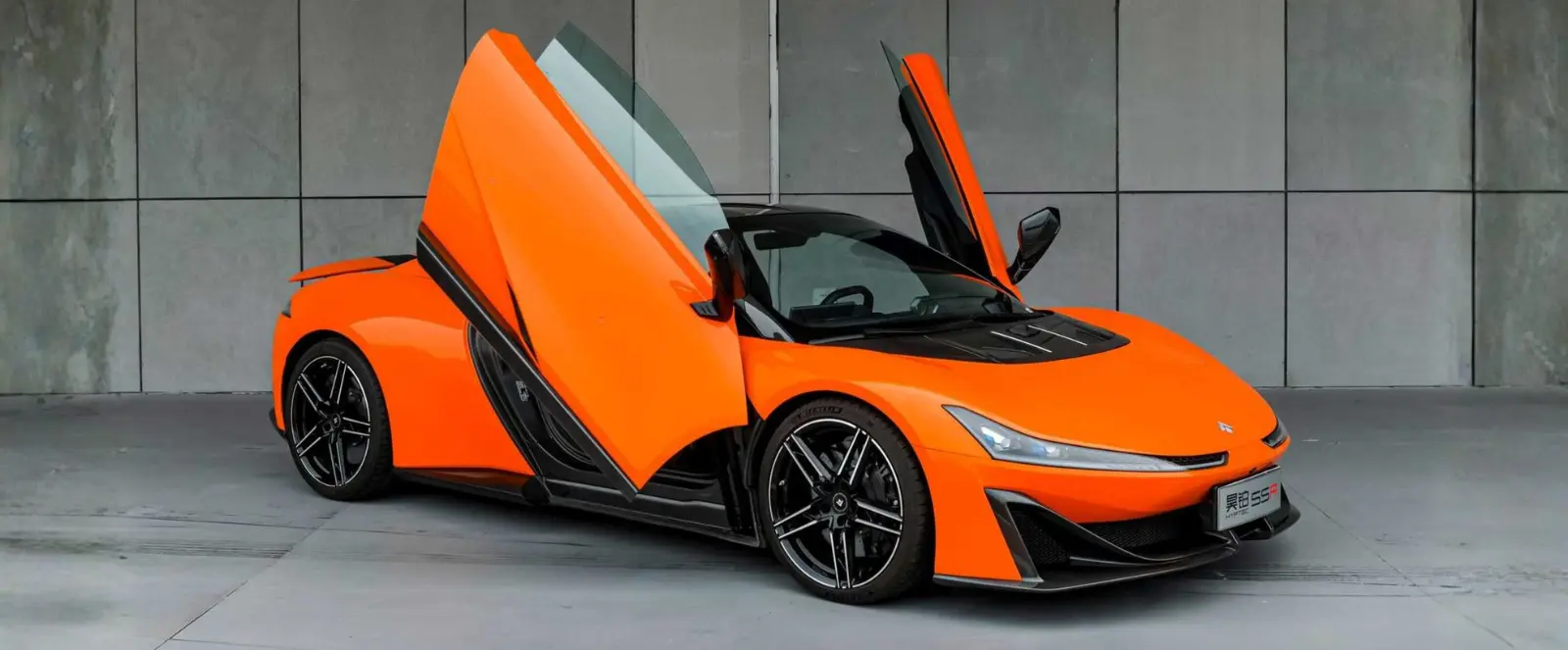
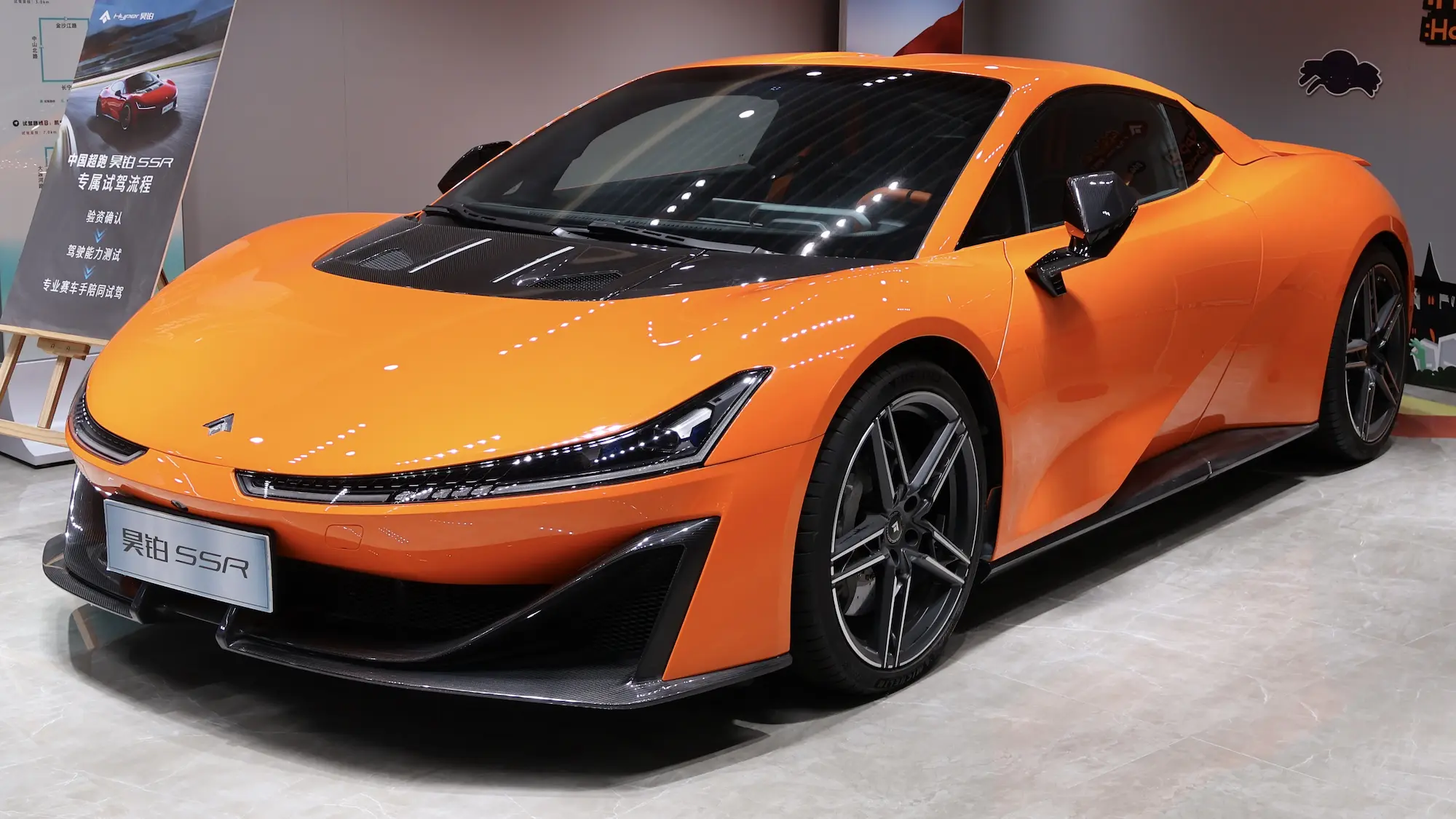
The Hyptec SSR is an electric two-seat sports car produced by GAC Aion under the Hyptec premium EV brand.
If you only look at it as “China’s first electric supercar,” you miss the bigger signal.
This car is a proof point that China is no longer only competing in practical EVs and tech-heavy sedans. It is reaching for the top shelf, the space traditionally guarded by Ferrari, Lamborghini, Porsche, McLaren, Bugatti, and the rest.
And it is doing it with the strongest weapon EVs have: repeatable, software-controlled power delivery, packaged with a global supply chain that can move fast when a market opportunity appears.
China’s wider EV context matters here too. The International Energy Agency (IEA) notes that in 2023, just under 60% of new electric car registrations were in China, with just under 25% in Europe and 10% in the US.
That volume builds factories, batteries, engineers, and ruthless competition. It is hard for any country to match that pace at the top end without that base.
The numbers people quote, and what they actually tell you
The headline specs that put it in the supercar conversation
Depending on trim, the Hyptec SSR is reported with:
- 0 to 100 km/h in 2.3 seconds for the entry version, and 1.9 seconds for the top trim
- 900 kW (about 1,224 hp) and 1,230 Nm system torque
- A 74.69 kWh NMC battery pack with up to 506 km CLTC range
- Top speed limited to 250 km/h
On paper, that acceleration number is right in the modern hypercar headline zone.
For comparison, here are a few manufacturer-published or well-established reference points:
- Bugatti lists the Chiron at 0 to 100 km/h in 2.4 seconds.
- Lamborghini lists the Revuelto at 0 to 100 km/h in 2.5 seconds.
This can help if you are trying to understand what “1.9 seconds” means in today’s landscape: it is not “quick for a Chinese car.” It is quick, full stop.
The catch: 0 to 100 is real, but it is not the whole story
Here’s the thing: EVs can win the first 3 seconds of a comparison more easily than they can win the next 30 minutes.
A car can be blistering off the line and still disappoint owners if it cannot handle:
- repeated hard runs without power dropping
- heat management in real climates
- braking performance after multiple high-speed stops
- tires and suspension tuning that make it feel stable, not nervous
A top speed limit can also be a clue. The SSR’s reported 250 km/h limit could be about tire certification, stability targets, powertrain safety margins, or energy consumption planning.
It does not automatically mean “it cannot go faster.” It often means “the company chose to cap it for the product’s current goals.”
The torque number that confuses everyone (and how to think about it)
You will often see super high torque claims tied to electric performance cars, including claims that talk about torque “at the wheels.”
This is where people talk past each other.
Motor torque vs wheel torque
Motor torque is what the motor produces.
Wheel torque is what ends up at the wheels after gear reduction.
A simple way to think about it is a bicycle: in a low gear, your legs do not magically become stronger, but the wheel feels more turning force because the gear ratio multiplies it.
So when someone says “12,000 Nm,” they might be talking about wheel torque after gearing, not the torque produced by the motor itself.
That idea is not unique to China. Rimac’s own technical specs for the Nevera list 2,340 Nm motor torque and 13,430 Nm wheel torque.
What this means is… very large torque numbers can be mathematically consistent, but they are not always useful for comparing brands, because:
- brands may calculate wheel torque differently
- tire radius affects the final force at the ground
- traction limits how much can be used at once
If you only do one thing, do this: when you see a huge torque figure, ask “motor torque or wheel torque?” and then look at weight, tires, and cooling. That trio tells you more about real performance than a single torque headline.
Why China can move so fast in high-performance EVs
People still treat Chinese performance cars like they are trying to copy the past. EV performance is not the past.
Three forces explain the speed of change.
1) Scale makes learning brutally fast
When a market sells millions of EVs, you get more real-world feedback, more supplier competition, and faster iteration loops. The IEA’s 2023 registration share is a clean way to see how concentrated the EV center of gravity has been.
2) The “engine advantage” has shifted toward batteries and software
In ICE supercars, a lot of advantage came from decades of engine development, sound, vibration control, and gearbox refinement.
In EV supercars, advantage leans heavily on:
- battery chemistry and thermal management
- inverter control and power delivery
- software logic for traction, torque vectoring, and stability
China has invested deeply in the EV stack, and its domestic competition has forced brands to get good at software-defined driving behavior.
3) Pricing power is different when the supply chain is domestic
A car like the SSR has been reported with a launch price in China starting at 1,286,000 yuan, with higher trims priced above that.
Regardless of what it costs after import duties and local market positioning, it shows a willingness to bring extreme specs into a price band that often undercuts imported exotics.
That is a pressure point for legacy brands, because performance gaps used to justify extreme pricing more easily than they can today.
Where the legacy superbrands still have a real advantage
It is easy to dismiss heritage as “marketing.” That is not quite accurate.
Legacy brands have assets that matter in ownership.
1) Trust, resale, and the social ecosystem
Ferrari and Lamborghini are not just cars. They are global social objects.
That ecosystem supports:
- resale demand
- collectors
- events and community
- an instant recognition factor that newcomers do not have
You cannot build this overnight. You can only build it by surviving multiple product cycles without breaking trust.
2) Track validation and chassis feel
Electric acceleration is easier to achieve than electric excellence.
The hardest parts to match are often boring:
- steering feel
- brake consistency
- high-speed stability
- suspension tuning that works across real roads
Legacy brands have long, painful feedback loops in these areas. A newcomer can catch up, but it has to show it repeatedly, not once.
3) Service networks and parts pipelines
For a luxury sports car, ownership experience is part of the product. If a sensor, a carbon panel, or a drive unit takes weeks or months to source, the thrill fades quickly.
This becomes especially important as brands expand internationally. In Saudi Arabia, for example, GAC’s local partner has publicly announced the official launch of AION and HYPTEC EV brands in the market, which is the kind of foundation required before high-end models can be supported properly.
Luxury sports cars have layers, not one scoreboard
When people ask “Will China beat Ferrari and Lamborghini?” they often assume there is one metric.
There isn’t.
A useful way to judge any luxury sports car brand is to think in layers.
Layer 1: Straight-line performance
This is where EVs can dominate. The SSR’s 1.9 second claim is a statement of intent.
Layer 2: Repeatable performance
How it performs after the third hard pull matters more than the first one.
Layer 3: Design and presence
You cannot spreadsheet your way into icon status. The design has to land emotionally.
Layer 4: Ownership and support
Service, parts, warranty handling, insurance acceptance, and repairs.
Layer 5: Culture and resale
The brand’s place in the world, and how easily someone will buy it from you later.
A Chinese supercar can win Layer 1 today. It can compete in Layer 2 as engineering matures. The toughest layers are 4 and 5, because they are built through time and trust.
Common mistakes people make when judging Chinese supercars
Mistake 1: Treating wheel torque as a universal comparison
Wheel torque depends on gearing and calculation method. Rimac’s own specs show how different motor torque and wheel torque can be, and why that gap exists.
Mistake 2: Assuming a fast launch equals a great track car
Heat, brakes, and tire management decide track stamina. Acceleration numbers alone do not.
Mistake 3: Ignoring local service reality
Even a brilliant car becomes frustrating if the local network is not ready.
Mistake 4: Thinking “heritage” is fake
Heritage often equals resale strength, proven support systems, and a stable collector market. That has real monetary value.
Mistake 5: Believing price is the full story
A lower purchase price can be offset by insurance, tire costs, downtime, and resale uncertainty.
How to decide: a simple framework that works in real life
Here is a framework that keeps you honest.
Step 1: Pick your primary goal
Choose one, not three:
- You want the fastest experience for the money
- You want the strongest brand signal
- You want the lowest hassle ownership
- You want long-term collectability
Be direct with yourself. Your choice changes the “best” answer.
Step 2: Score the car on four questions
Use a simple 1 to 5 score:
- Can it deliver repeatable performance in your climate?
- Is the service and parts support proven where you live?
- Do you actually like the design enough to keep it?
- If you sell in 18 months, is there a buyer pool?
Step 3: Do a quick checklist before you commit
Keep it short and practical:
- Written insurance quote, not a verbal “should be fine”
- Warranty terms, especially exclusions for track use
- Parts lead time questions for high-risk items (carbon panels, sensors, lights)
- Tire availability and cost in your region
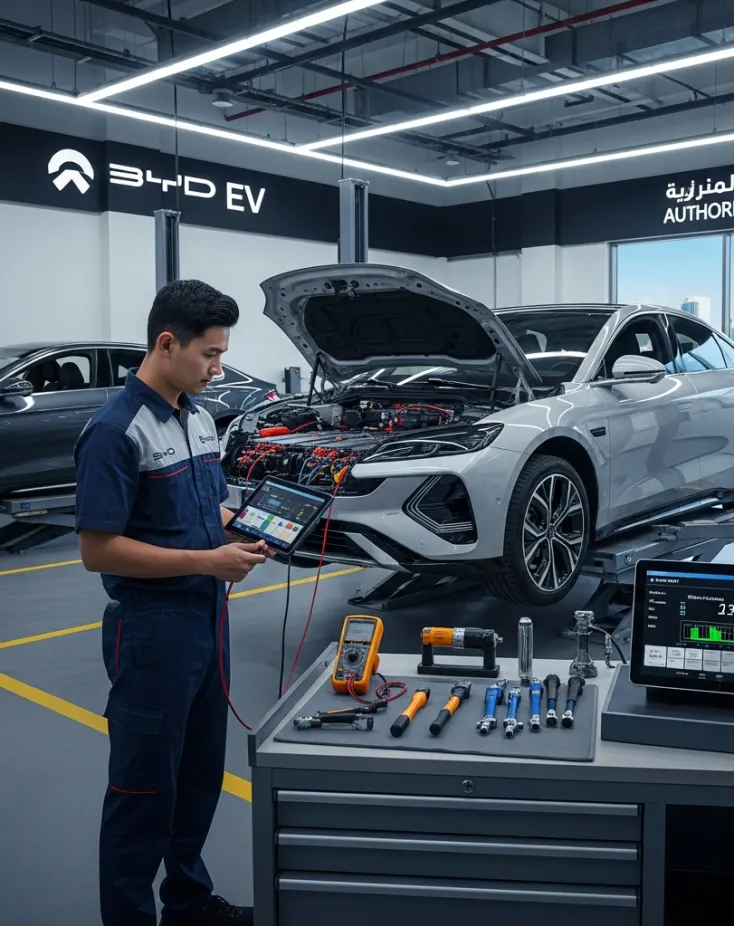
- Who can work on high-voltage systems locally
If you only do one thing, do this: treat the purchase like a system decision, not a spec decision.
A short scenario: what the decision looks like for a real buyer
Khalid has a garage spot in the GCC and a clear budget.
He can buy a used Italian supercar with a loud engine and a badge that everyone recognizes. Or he can buy something new-school, a high-performance EV that feels like a preview of where the world is going.
He makes a list of what he will actually do:
- late-night drives
- a couple of long highway runs a month
- maybe one or two track days a year
The emotional side says: “I want something rare and new, and I want the speed.”
The practical side asks four questions:
- If a high-voltage component fails, who diagnoses it?
- If a carbon panel gets damaged, what is the lead time?
- What will insurance do with a low-volume model?
- If I sell next year, who wants it?
He realizes something important: he is not deciding between “fast” and “slow.” He is deciding between two different types of value.
The legacy car sells a complete story today.
The newcomer sells performance certainty and future-facing tech, with more unknowns around ownership.
Neither choice is dumb. But pretending the unknowns do not exist is how people regret supercar purchases.
FAQ
Is the Hyptec SSR actually record-level in drifting?
Guinness World Records lists the fastest drift by an electric car at 213.523 km/h, achieved in a Hyptec SSR in Beijing on 29 October 2025.
Why do some EVs brag about huge torque numbers?
Because wheel torque after gearing can be much higher than motor torque. Rimac’s technical specs show motor torque and wheel torque as separate numbers, which helps explain why the wheel figure can look extreme.
Does a 1.9 second 0 to 100 automatically mean it beats Ferrari or Lamborghini?
It means it is extremely quick off the line. It does not automatically mean better steering feel, braking consistency, track stamina, or resale stability. A Lamborghini Revuelto’s published 0 to 100 is 2.5 seconds, and a Bugatti Chiron’s published 0 to 100 is 2.4 seconds, yet those cars compete on far more than launches.
Is the Hyptec brand expanding into Saudi Arabia?
GAC’s corporate news and Aljomaih’s local announcement both describe the official launch of AION and HYPTEC in Saudi Arabia. Availability of specific models varies by market and time, so buyers should confirm what is officially supported.
What is the safest way to judge a new supercar brand?
Do not over-weight a single spec. Check repeatable performance, local support, insurance reality, and resale demand in your region.

.webp)