




%201.svg)

Dubai’s vision for self-driving robotaxis on the road by 2026 isn’t just about futuristic transport or catching up with cities like San Francisco and Beijing. For everyday EV owners in the UAE, it means the technology quietly steering, braking, and watching the road for you is about to take centre stage. Whether you already drive an electric vehicle or are considering switching, understanding how ADAS (Advanced Driver Assistance Systems) works,and what can go wrong,is quickly becoming essential knowledge. It’s easy to think of robotaxis as something for tomorrow. But the reality is that many of the same sensors, cameras, and software in those autonomous vehicles are already embedded in the EVs we drive across Dubai and Abu Dhabi today. Routine repairs, a minor parking scrape, or even a simple software update can compromise these systems. Without careful calibration, the impact goes well beyond just a dashboard warning light,it can affect your safety, your wallet, and your driving confidence.
Why Dubai’s 2026 Robotaxi Push Matters to All EV Owners
Dubai’s plan to roll out robotaxis by 2026 makes headlines, but the real shift starts long before we step into a fully autonomous ride. The core systems that make robotaxis possible, perception, object detection, lane keeping, and emergency response, all rely on a network of cameras, radar, and sensors known as ADAS. These ADAS building blocks have quietly moved into mainstream EVs, making their correct operation crucial for everyday drivers.
Robotaxi Tech and Everyday EVs Share More Than You Think
The technologies behind robotaxis and consumer EVs are nearly identical where it counts. Lane-keeping assist, adaptive cruise control, traffic sign recognition, and automated emergency braking are now standard or optional features in many UAE-market electric cars. Manufacturers including Tesla, BMW, Mercedes-Benz, Hyundai, Kia, Nissan, and BYD install these systems in models tailored for the local climate and regulations. The more Dubai pushes for advanced autonomy, the higher the expectation for all vehicles, including yours, to perform according to these standards.
Growing ADAS Awareness Across the UAE
You might have noticed more dashboard alerts, chirps, or steering feedback over the last few years. As Dubai modernises its road safety standards and insurance requirements, there’s growing focus on ensuring ADAS features actually work as designed. Car dealers, workshops, and insurers are starting to pay closer attention to ADAS calibration after accidents or repairs, knowing that out-of-sync sensors can compromise both safety and liability.
Which ADAS Sensors, Cameras, and Radars Does Your EV Rely On?
Modern EVs use an array of interconnected ADAS components to monitor surroundings and assist the driver. Understanding these elements, and where things can go wrong, helps you spot potential issues early.
- Front Cameras: Mounted on the windscreen behind the rear-view mirror, these handle lane detection, traffic sign recognition, and sometimes forward collision warnings.
- Surround Cameras: Placed in wing mirrors, bumpers, and the rear, these enable parking assist and 360-degree surround view.
- Radar Units: Hidden behind bumpers or grilles, radar tracks moving vehicles and helps with adaptive cruise control and emergency braking, even in poor visibility.
- Ultrasonic Sensors: Often embedded around the bumpers, these help with close-range tasks like parking, obstacle avoidance, and low-speed manoeuvring.
- ADAS Control Modules: Usually located in protected parts of the vehicle, these computer modules fuse data from all sensors and make real-time decisions.
Why Sensor and Camera Placement Is Critical
Unlike traditional components, ADAS sensors and cameras must be perfectly aligned to maintain accuracy. Slight misplacement, whether from a cracked windscreen, new bumper, or even a jolt from a kerb,can skew the system, causing anything from subtle drift to total feature deactivation. In Dubai’s heat, adhesive mounts or plastic housings can occasionally deform, especially after repairs if original manufacturer standards are not followed.
The Software ‘Brain’ Behind the Scenes
Even the most advanced EV hardware relies on tightly integrated software to link sensor input to physical actions. Updates to onboard software, sometimes delivered over-the-air, sometimes done at a service centre, can reset or offset calibration parameters. This is why proper post-update checks are critical, especially when features like auto-braking or lane centring are involved.
What Everyday Safety Features Depend on ADAS?
Today’s EVs feature an increasing list of driver assistance technologies, each relying on a precise network of sensors and calibrations.
- Lane Keeping Assist: Uses cameras to track road markings; a slight camera misalignment can cause the system to miss lines or issue false warnings.
- Adaptive Cruise Control: Relies on front radar and camera inputs to maintain safe distances. Faulty radar can mean abrupt braking or risky follow distances.
- Emergency Braking: Depends on both camera and radar to detect hazards. If out of calibration, the vehicle may brake too soon, too late, or not at all.
- Blind Spot Monitoring: Requires rear and side sensors to detect adjacent vehicles. Bad calibration may blind these zones, defeating the purpose.
- Parking Support and 360-Degree Cameras: Combine all-around sensor and camera input to guide low-speed manoeuvres and avoid obstacles. Incorrectly mounted cameras or replaced bumpers can create blind spots or warped perspectives.
The Hidden Risks of Small Sensor Errors
A poorly calibrated ADAS sensor might still seem to ‘work’ at first glance, but even a few degrees of misalignment can:
- Fail to detect a vehicle, cyclist, or pedestrian in time
- Misjudge distance in stop-and-go traffic
- Blind automatic parking systems to low obstacles
- Trigger false alarms that drivers learn to ignore, undermining trust
In the UAE, where driving conditions can change instantly, from wide highways to crowded car parks, these risks multiply.
When Is ADAS Calibration Needed for Your EV?
Most EV manufacturers prescribe strict guidelines on when ADAS calibration should occur, but real-world scenarios in Dubai mean many vehicles miss out on timely checks.
- After Windshield Replacement: If the front-facing camera is moved or the new glass alters its position by even a few millimetres, recalibration becomes essential. Many insurers in the UAE now require an ADAS calibration report before settling glass claims on modern EVs.
- After Bumper Repairs or Minor Collisions: Radar and ultrasonic sensors live behind panels that are often removed or replaced during minor repairs. Even repainting or realigning a bumper can skew sensor positions.
- After Suspension, Wheel, or Tyre Work: Adjustments to wheel alignment, ride height, or suspension geometry alter how the vehicle sees the road. Uncalibrated sensors can misread their environment.
- Post-Software Update or Diagnostics Reset: Some updates reset ADAS parameters. Failure to re-check calibration can leave features off or wrongly configured.
- Any Time ADAS Warnings Appear: Ignoring dashboard warnings is risky. What looks like a minor glitch could mean a safety-critical sensor is out of spec.
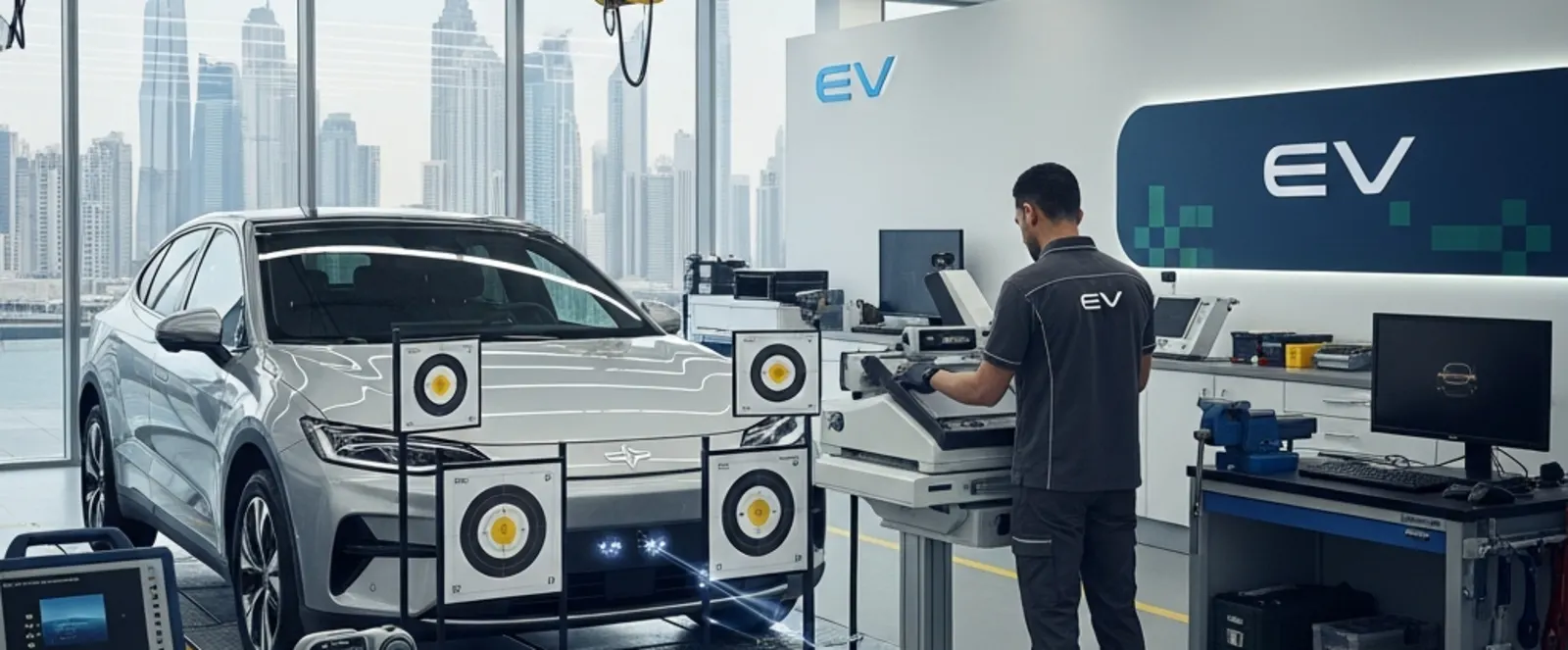
ADAS calibration procedures vary by make and model. Some require static (workshop-based) calibration using special targets, others need dynamic (on-road) tests, and many modern EVs mandate both. It’s essential that workshops follow manufacturer-guided steps for your specific vehicle.
How to Spot ADAS Problems Before They Become Expensive
Not every ADAS issue results in an obvious warning. Being alert to early symptoms is your best defence against major repair bills, and dangerous situations.
- Dashboard Alerts: The most direct sign that a calibration or sensor fault needs attention. Do not ignore repeated warnings or ‘ADAS unavailable’ messages.
- Disabled or Inconsistent Features: Lane assist, cruise control, or parking aids that refuse to engage, turn off suddenly, or work erratically can point to misaligned sensors.
- Inconsistent Driver Assistance Behaviour: Sudden steering corrections, unreliable lane centring, or inaccurate distance keeping signal sensor or calibration issues.
- False Alarms or Missed Hazards: Unexpected beeping, unnecessary braking, or a lack of warning when hazards are clearly present indicate a problem.
- Changes in Brake or Steering Response: Features that feel delayed or out of sync can be a clue that recalibration is needed.
Why Addressing Small Issues Early Saves Money
Ignoring early warning signs can result in:
- Permanent disabling of safety features, potentially invalidating insurance in the event of an accident
- Secondary damage or misdiagnosis, requiring more invasive (and costly) repairs
- Potential liability if your car fails safety inspection or contributes to an accident
Quick intervention at a qualified ADAS-equipped workshop helps stop a minor issue from spiralling into a much larger expense.
How UAE EV Owners Can Reduce ADAS Repair and Calibration Costs
Controlling your risk, and your budget, means taking a proactive approach to maintenance, repair, and workshop selection.
- Choose Specialist Workshops: Opt for service centres with experience in EV-specific ADAS diagnostics and calibration. Not every workshop in Dubai or Abu Dhabi is equipped with the right targets, tools, and software for accurate calibration on modern EVs.
- Ask About OEM Procedures: Ensure the repairer follows official manufacturer guidelines and provides a calibration report after any ADAS work. Generic or unchecked repairs can void warranties and leave features non-functional.
- Request Post-Repair Testing: After windscreen, bumper, or suspension repairs, insist on a road test or electronic verification that all ADAS features are working. Do not accept a ‘no warning lights, all clear’ response as proof.
- Protect Sensors and Cameras: During routine cleaning or parking, avoid high-pressure washing on cameras and sensors. For long-term parking, especially in exposed sunlight, use sunshades or covers where safe. Report even small cracks or impacts promptly.
- Keep Records: Maintain a log of ADAS warnings, repairs, and calibration dates. This history helps with warranty claims and can smooth insurance settlements in the UAE.
What to Ask Your Workshop Before Approving ADAS Repairs
- Do you use OEM calibration procedures and equipment specific to my EV model?
- Can you provide documentation or a calibration report after the repair?
- How do you perform post-repair testing for ADAS features?
- Is your team trained on high-voltage EV systems as well as ADAS components?
- Are there any manufacturer- or RTA-specific requirements or updates relevant to my vehicle?
Asking these simple questions can separate a truly qualified EV workshop from those offering only superficial repairs.
Conclusion: ADAS Is No Longer Optional, It’s the New Safety Baseline for UAE EV Owners
Dubai’s commitment to robotaxis brings world-class vehicle technology, and world-class expectations, right to our doorstep. For every EV owner, ADAS is now as essential to safety as seatbelts and airbags. Routine calibration and prompt attention to warning signs ensure that your features, your insurance, and your peace of mind aren’t left to chance. In a rapidly evolving market, staying ahead on sensor maintenance isn’t just smart, it’s necessary for anyone driving tomorrow’s cars today.



.webp)