



%201.svg)

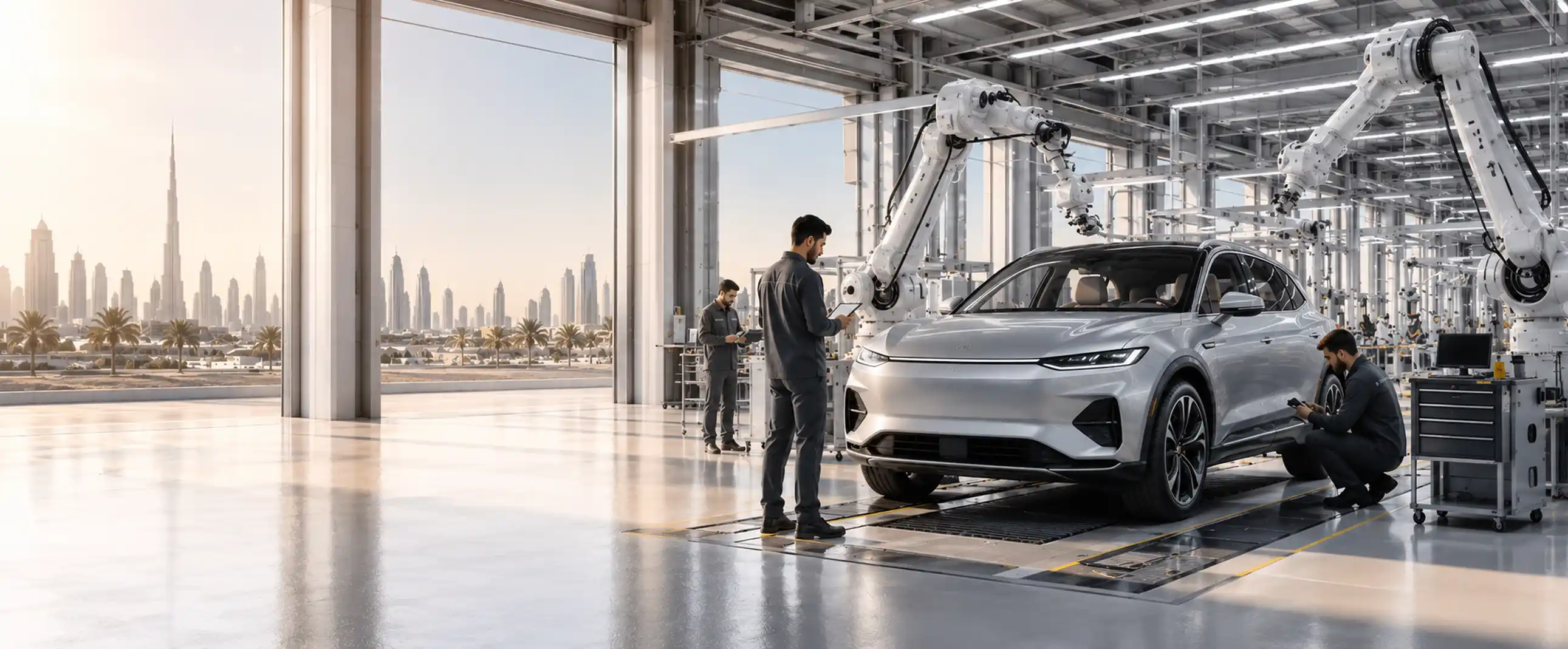
The UAE has always been a strong market for luxury cars, but it is now moving towards something bigger: building and supporting more advanced vehicles locally. ROX’s planned AI vehicle manufacturing facility at KEZAD Logistics Park in Abu Dhabi is a clear example of that shift.
The project is expected to cover around 10,000 square metres and begin operations in the second half of 2026. ROX is also targeting annual production capacity of 300,000 vehicles by 2030, with the facility supporting vehicle production and exports across the Middle East and global markets.
For UAE buyers, businesses, and investors, this is not just about another car brand entering the market. It could affect how luxury vehicles are built, delivered, customised, repaired, and supported in the region.
What ROX Is Building in Abu Dhabi
ROX has signed a strategic lease agreement with KEZAD Group to establish one of the Middle East’s first advanced AI vehicle manufacturing centres at KEZAD Logistics Park in Abu Dhabi. The facility is planned within KEZAD’s industrial ecosystem and will focus on intelligent manufacturing, luxury all-terrain SUVs, and export growth.
Here’s how it works. Instead of depending only on finished vehicles imported from overseas, ROX will have a manufacturing and preparation base inside the UAE. This could allow more work to happen closer to local and regional customers.
That may include vehicle production, quality checks, regional preparation, selected customisation, and technical support. For luxury vehicles, this matters because buyers expect strong finishing, reliable technology, clear delivery timelines, and good aftersales support.
Why 2026 Matters
The facility is expected to start operations in the second half of 2026, making it an important year for the UAE automotive sector. If the project moves as planned, Abu Dhabi could take a stronger role in advanced vehicle production instead of being mainly a premium car sales market.
This timing also fits wider changes in the UAE car market. More drivers are comparing petrol, hybrid, plug-in hybrid, and electric vehicles. Chinese car brands are becoming more visible, and buyers are paying closer attention to software, warranty support, spare parts, service access, and resale confidence.
For UAE businesses, the project could create opportunities in:
- Logistics and vehicle movement across the UAE and GCC, helping brands manage deliveries and stock more efficiently.
- Parts supply for selected models and components, which may reduce delays for common repair or replacement needs.
- Technical services, diagnostics, and software support, giving owners better access to specialised checks.
- Vehicle customisation for UAE and regional buyers, including finishes, accessories, and market-specific options.
- Aftersales support linked to local manufacturing activity, which can improve confidence after the vehicle is sold.
Why KEZAD Is a Smart Location
KEZAD gives ROX access to Abu Dhabi’s industrial infrastructure, logistics network, ports, and road connections. This is important because vehicle manufacturing depends on the smooth movement of parts, equipment, and finished cars.
Luxury vehicles are especially sensitive to delays. If parts are missing or delivery dates keep shifting, buyers lose confidence. A base in KEZAD could help ROX manage regional distribution more efficiently and support exports from Abu Dhabi.
The location could help with:
- Bringing parts into Abu Dhabi through established logistics routes, which can support smoother production planning.
- Moving finished vehicles across the UAE and nearby markets, helping reduce regional delivery pressure.
- Supporting exports from a central regional hub, especially for Middle East and nearby international markets.
- Building a network of suppliers and service partners around the facility, which can strengthen the local automotive ecosystem.
The catch is that local manufacturing will not remove every supply chain issue. Batteries, electronics, chips, sensors, and specialist components may still depend on global suppliers, especially in the early stages.
How AI-Driven Manufacturing Could Help
AI-driven manufacturing can sound complicated, but the basic idea is simple. It uses data, sensors, connected systems, and automated checks to make production more accurate and consistent.
For a luxury vehicle facility, this could help with quality control, production planning, defect tracking, and process management. In real life, that means the factory may be better at spotting issues early, keeping production records, and managing output more efficiently.
For ROX, this could support:
- Earlier detection of production faults, helping reduce the chance of issues reaching customers.
- Better planning for parts and vehicle output, which can make production more predictable.
- More consistent quality checks, especially important for luxury SUV buyers.
- Stronger records for aftersales and warranty support, making future inspections easier to manage.
For buyers, the value is not simply that the factory uses AI. The real benefit would be better build consistency, fewer delivery issues, and stronger technical support if the systems are managed properly.
What It Could Mean for UAE Luxury SUV Buyers
For luxury SUV buyers in the UAE, the ROX facility could bring practical benefits over time. Local production or preparation may reduce waiting times for selected models and make regional customisation easier.
This can help buyers who want specific colours, interiors, accessories, technology features, or GCC-focused specifications. It could also improve pre-delivery checks because vehicles are being prepared closer to the market.
Potential benefits include:
- Better availability of selected luxury SUVs, especially if production is planned around regional demand.
- More regional customisation options, giving UAE buyers choices suited to local preferences.
- Faster delivery for some models, depending on how much work is completed in Abu Dhabi.
- Stronger confidence because the brand is investing locally, not only selling imported vehicles.
- Better support if ROX builds a proper aftersales network in the UAE, especially for diagnostics and parts.
Still, local manufacturing does not automatically mean every vehicle will be cheaper or every repair will be faster. The benefits will depend on how much parts storage, technical support, and service capability ROX builds around the factory.
Parts Availability and Repair Support
Parts availability is one of the biggest concerns for luxury vehicle owners in the UAE. A small issue can become frustrating if the part has to be ordered from overseas and takes weeks to arrive.
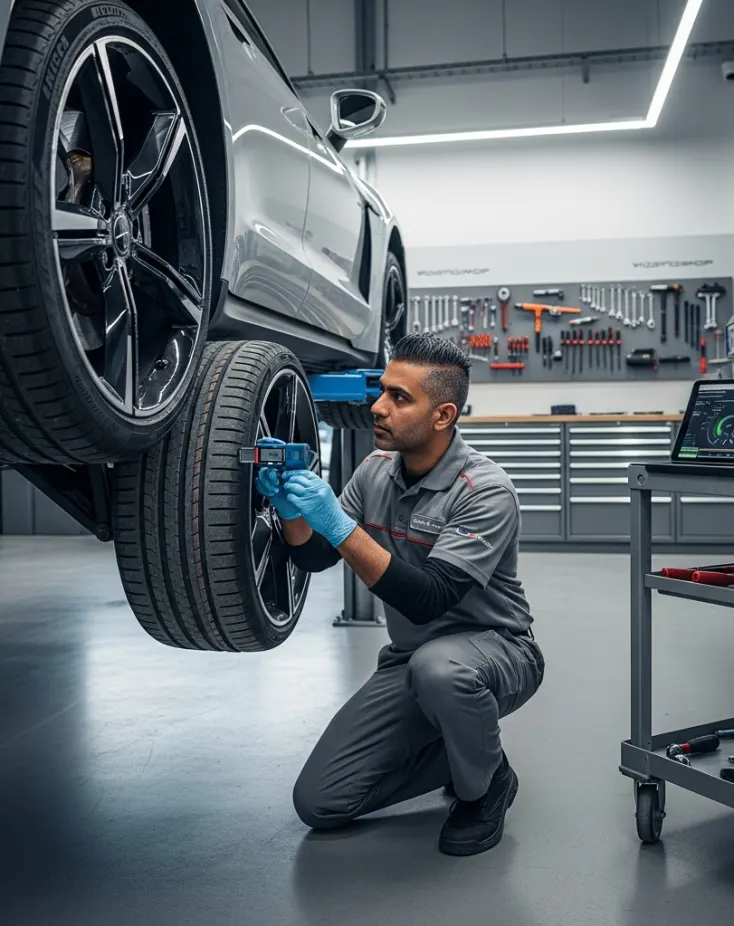
A local ROX facility could help if it leads to better parts stocking and technical support in Abu Dhabi. If the brand is producing or preparing vehicles locally, it may also keep more tools, diagnostic equipment, trained staff, and selected components nearby.
This could matter for:
- High-voltage parts in new-energy vehicles, where specialist handling and safety checks are needed.
- Body panels and trim pieces, which can be costly and slow to source for newer luxury models.
- Sensors, cameras, and control modules, especially as modern SUVs rely heavily on electronic systems.
- Warranty inspections and repair approvals, where local technical support may reduce waiting time.
However, the facility must be matched with a strong service network. If production grows but parts and workshop support do not keep up, UAE owners may still face delays.
Jobs and Skills in Abu Dhabi
The ROX facility could also support skilled jobs in Abu Dhabi. Advanced vehicle manufacturing needs more than basic assembly work. It needs technicians, engineers, software specialists, quality control teams, logistics staff, and diagnostic experts.
This matters because the UAE is working to grow high-value non-oil industries. The ROX project has also been linked to the UAE’s Operation 300Bn industrial strategy, with official announcements saying it has the potential to contribute up to 10% to the initiative.
Useful skill areas may include:
- EV and hybrid system diagnostics, helping technicians work safely on new-energy vehicle components.
- Smart factory operations, where staff manage data, connected systems, and production processes.
- Software and sensor support, which is becoming more important in modern luxury vehicles.
- Luxury vehicle finishing, where small details in trim, paint, and interiors affect buyer confidence.
- Automotive logistics and export planning, helping move vehicles and parts across regional markets.
Over time, the biggest impact may come from the wider ecosystem that grows around the factory, including suppliers, training providers, workshops, and support businesses.
What It Means for Abu Dhabi’s Automotive Ambitions
ROX’s KEZAD facility fits Abu Dhabi’s wider goal of attracting advanced manufacturing and strengthening non-oil industrial growth. The UAE already has strong luxury vehicle demand. The next step is turning that demand into more local capability.
If the project succeeds, Abu Dhabi could become more than a sales market for premium cars. It could become a regional base for intelligent vehicle production, customisation, parts support, and exports.
That could also encourage other automotive brands to consider UAE-based assembly, manufacturing, or technical support in the future.
Possible Challenges
The project has strong potential, but there are still practical challenges. Scaling vehicle production is not easy, especially when the vehicles include advanced electronics, new-energy systems, and luxury features.
The main challenges include:
- Continued reliance on imported batteries, electronics, and specialist parts, which may still expose production to global delays.
- The need to train enough skilled workers, especially for AI-driven manufacturing and EV-related systems.
- Supply chain pressure if global shipping or parts availability changes, affecting timelines and costs.
- Building strong aftersales support alongside production, so owners are supported after delivery.
- Maintaining consistent quality as production volume grows, which is vital for luxury vehicle trust.
ROX’s target of 300,000 vehicles annually by 2030 is ambitious. Reaching that level will depend on demand, factory performance, parts supply, export success, and customer trust.
What UAE Buyers Should Watch
For UAE buyers, the ROX KEZAD facility is worth watching, but expectations should stay practical. A local factory is a strong sign of commitment, but the real test comes after the vehicle is sold.
Before buying any new luxury vehicle linked to local production, buyers should check:
- Whether the vehicle is fully built locally, assembled locally, or only finished locally, as this affects expectations around support.
- Which parts are stocked in the UAE, especially common repair items and high-value components.
- How strong the warranty coverage is, including batteries, electronics, sensors, and control modules.
- Whether trained technicians are available locally, because advanced vehicles need proper diagnostics.
- How quickly common repairs can be completed, especially if the vehicle is used daily.
- Whether resale buyers trust the brand in the UAE market, which can affect long-term value.
Local manufacturing can improve ownership, but parts, warranty, diagnostics, and service quality still matter just as much as production.
Final Thoughts
ROX’s planned KEZAD facility could become an important step for luxury vehicle manufacturing in the UAE. With operations expected in the second half of 2026, the project could support local production, export growth, skilled jobs, stronger supply chains, and Abu Dhabi’s position as a regional automotive hub.
For UAE drivers and businesses, the biggest changes may be seen in vehicle availability, customisation, parts support, and aftersales confidence. The project also shows that the UAE is moving beyond being only a luxury car market.
The catch is execution. Imported parts, global supply risks, workforce training, and service readiness will still matter. If ROX can build not only vehicles but also a reliable support network around them, the KEZAD facility could help make Abu Dhabi a serious centre for intelligent luxury vehicle manufacturing.