



%201.svg)

As electric vehicles become a more common sight on Dubai’s roads, one of the first big questions for prospective and current owners is: how much does it actually cost to keep an EV charged up? With the city’s charging infrastructure growing fast and more options than ever for topping up your battery, understanding where your dirhams go and which charging method fits your life best matters more than ever. Although Dubai has made it easier for drivers to choose between home and public charging, the reality is that the cheapest, most convenient option often depends on where you live, how you drive, and what kind of parking you have access to. This guide breaks down the real numbers for 2026, using current rates and trends, and shares practical advice that goes beyond simple price-per-kWh comparisons for anyone using or considering an electric car in Dubai.
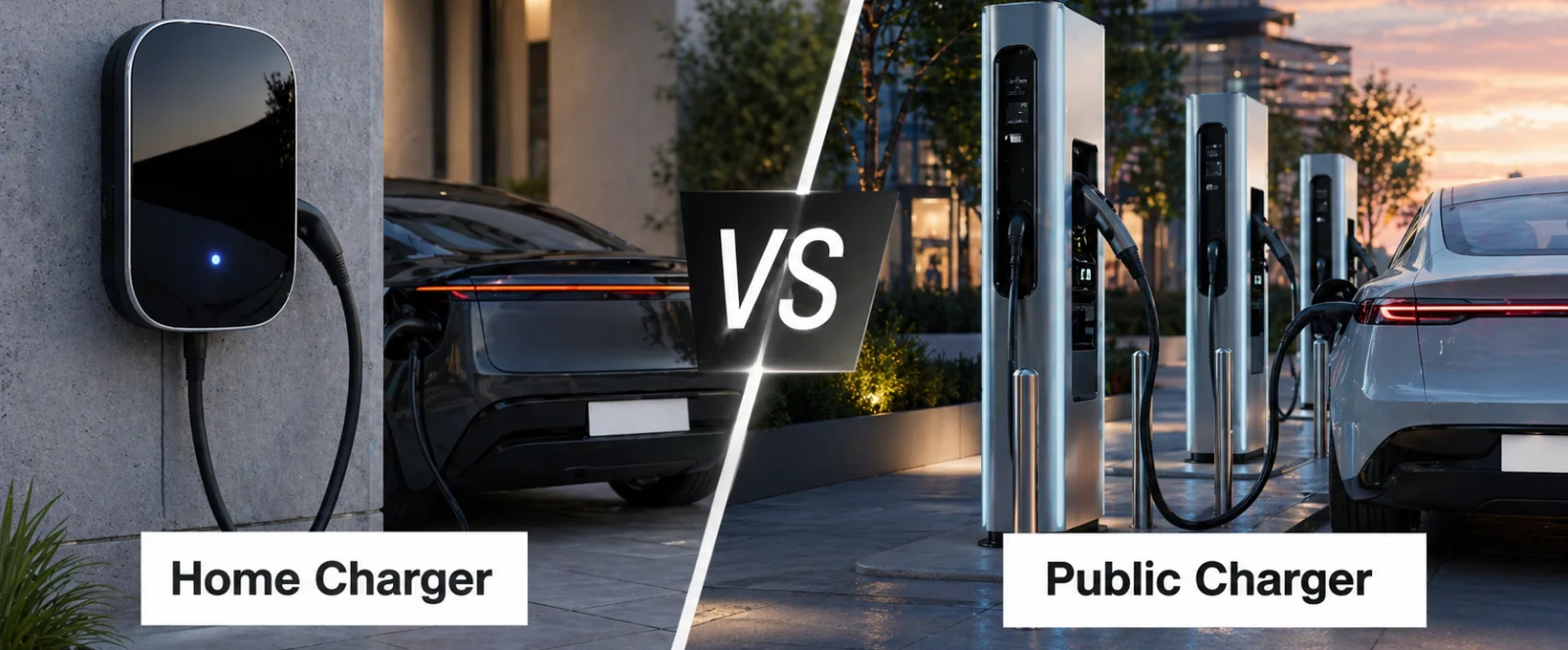
Is Home Charging or Public Charging Cheaper for EV Owners in Dubai in 2026?
For most daily EV owners in Dubai, charging at home is generally cheaper than relying on public charging stations. This is due to the lower residential electricity rates compared to the tariffs found at public chargers. But there are important exceptions, especially for those who live in apartments without private parking or those who drive long distances regularly.
Why the Cheapest Option Depends on Where You Park
If you have a villa with a garage or a dedicated parking spot where a home charger can be installed, you stand to save the most. Villa owners can typically install private wall boxes, often at a one-off installation cost (usually between AED 3,000 and AED 7,000, depending on charger brand and on-site requirements). After that, you pay Dubai’s residential electricity rates for each kWh used. Apartment dwellers, on the other hand, often face more hurdles. Installing a private home charger may not always be allowed by building management or could be logistically difficult, leading to a higher reliance on public charging, and therefore higher long-term costs.
What Home Charging Really Costs in Dubai
Charging at home principally involves two costs: the upfront price of installing the charger, and the ongoing cost of electricity every time you charge.
Electricity Rates and Cost Per kWh at Home
In Dubai, the residential electricity rate for most villa and flat owners typically ranges from AED 0.28 to AED 0.32 per kWh in 2026, though this can vary a little based on consumption brackets and any updated tariffs. For a typical EV with a 60 kWh battery, a full charge would cost between AED 16.8 and AED 19.2 at home.For most users who charge overnight and top up regularly (rather than letting the battery run flat), the cost is even less since you rarely fill the battery from zero each time.
How Charger Type Affects Charging Time and Cost
Most home installations in Dubai use AC wall boxes at either 7kW or 11kW speeds. The installation cost for these (if cabling and approvals are straightforward) is a one-off, while the charging time depends on both the power of the wall box and your car’s onboard charger.Faster wall boxes (like 22kW) exist but are only suitable for a handful of vehicles and come with higher installation costs, which may not be justified for most drivers.
Upfront Costs for Wall Boxes, Installation, and Approvals
Expect to pay between AED 3,000 and AED 7,000 in total for a typical home charger installation in 2026, with some variation if complex electrical upgrades or cabling runs are required. Some developments require approval from DEWA (Dubai Electricity and Water Authority), your property developer, or a building owners' association. Allow for a few weeks' lead time for permissions and installation scheduling.
What Public Charging Really Costs in Dubai
Public charging tariffs in Dubai are structured differently than residential rates. The main operator is DEWA’s EV Green Charger network, with some private operators offering their own pricing structures.
AC vs DC Public Charger Pricing
Public AC chargers (similar to home wall boxes) typically cost around AED 0.38 to AED 0.45 per kWh in 2026. Fast DC chargers, needed for quick top-ups or long trips, are usually priced higher, in the range of AED 0.58 to AED 0.65 per kWh.If you depend on fast charging stations (DC) for most of your energy, your total charging cost could be at least 60% higher per kWh compared to charging at home.
Session Fees, Idle Fees, and Parking Charges
Public charging often comes with extra costs:
- Session/Activation Fees: Some locations charge a fixed fee per charging session, on top of the per-kWh cost.
- Idle Fees: After your car is fully charged, you may be billed an additional fee for each minute it remains connected, encouraging drivers to move their cars promptly.
- Parking Fees: In some cases, especially in commercial or mall car parks, you may have to pay for parking separately from charging.
These can add up, so the headline kWh rate is rarely the full story.
Why Fast Charging Usually Costs More Per kWh
DC fast charging requires much more advanced equipment, with higher installation and maintenance costs for providers. The premium pricing reflects this, but for everyday top-ups, most drivers won’t need these speeds except during longer trips.
Which Everyday Factors Change the Cost Comparison
While the kWh price is a big driver, the choice between home and public charging also depends on practical, real-life factors.
- Daily mileage: Low-mileage drivers who rarely run their battery low find home charging easiest to manage and cheapest to run.
- Charging frequency: Regular top-ups at home are less stressful and avoid high-rate public chargers.
- Battery size and charging losses: Larger batteries or inefficient charging (mainly at fast chargers) can raise your total energy costs, so real-world cost per km can vary.
- Home parking and access: If you lack private parking or live in an apartment without EV infrastructure, public charging becomes a necessity,sometimes even if your daily driving is minimal.
When Home Charging Is the Better Choice
For villa owners and anyone with reserved, lockable parking, installing a home charger is almost always the most cost-effective, stress-free solution. Charging overnight at home, taking advantage of lower residential tariffs, means you have a ‘full tank’ each morning without any special planning.
- Less time spent waiting: No queues or risk of arriving to a busy public charger.
- Lower running cost: Lower kWh rates, no session or idle fees, and potentially less battery stress compared to repeated fast charging.
- Convenient for routine use: Fits well for those who mostly drive within city limits.
When Public Charging Makes More Sense
Public charging is the best fit for:
- Apartment residents: If you live in a building where home charger installation isn’t allowed or is unfeasible, public chargers will be your only option.
- Long-distance drivers: If you regularly drive between emirates or clock high weekly mileage, you’ll need the flexibility of DC fast chargers, despite the higher cost.
- Occasional use or visitors: Occasional users or people relying on rented accommodation without fixed parking often depend on public charging.
How to Use Public Charging Without Overspending
- Favour AC public chargers over DC fast options when possible,they are slower but notably cheaper.
- Avoid leaving your car plugged in after charging to keep idle fees at bay.
- Plan charging for off-peak locations or times to get easier access and avoid parking fees.
How to Choose the Cheapest Charging Setup for Your Driving Routine
Choosing the right charging setup is about more than just the headline kWh rate. Consider these points to find the approach that fits your life and budget:
- Calculate your weekly mileage. Estimate how often you’d need to recharge.
- Check parking arrangements at home. Do you have a dedicated parking spot where a wall box can be safely and legally installed?
- Get quotes for home charger installation before deciding. Initial costs are higher, but long-term savings often make up for it within 1–2 years of ownership.
- Factor in building rules if you live in an apartment. Some blocks are now EV-ready, while others strictly prohibit private charger installs.
- Balance convenience against raw cost. Sometimes, higher-cost public charging is worth it for flexibility, especially for unpredictable schedules or shared vehicles.
Best Charging Option by Driver Type in Dubai
- Villa owners with private parking: Home charging is strongly recommended,cheapest and most hassle-free.
- Apartment residents with EV-friendly buildings: Home charging is best, if allowed, but public charging is the realistic fallback.
- Apartment residents without EV infrastructure: Rely on public chargers and factor the higher cost into your budget.
- Frequent long-distance drivers: Mix home charging for daily use with public DC fast charging for road trips or busy periods.
Conclusion
Home charging remains the most pocket-friendly and convenient option for most EV owners in Dubai, especially those with a villa or a dedicated parking space. Public charging is improving in speed and availability, but comes at a premium and is best used for topping up, road trips, or when home charging isn’t possible. Ultimately, the best choice hinges on your parking situation and driving habits. Before deciding on your next EV or charging solution, weigh installation costs, electricity tariffs, and real-life convenience to get the most value from electric driving in the UAE.