




%201.svg)
April 22, 2026

Category :
Buying Guide
Tensions in the Middle East often ripple through oil markets, affecting everything from global fuel prices to local pump costs in the UAE. For many Emirati motorists and expats alike, this volatility feels all too familiar,one news headline can change household budgets overnight. With more UAE drivers weighing their fuel options, electric vehicles (EVs) have stepped into the spotlight, not just as a cleaner choice, but as a smarter, more resilient alternative during periods of uncertainty.This article explores how regional instability makes the case for EVs even stronger in the UAE. We’ll look at why petrol-car owners are more exposed to oil shocks, how the UAE’s expanding charging network reduces risk for EV drivers, and what daily life looks like when you choose electricity over petrol. Whether you already own an EV, are considering switching, or just want to understand your options, these insights will help you weigh long-term costs, risks, and benefits.
Why fuel-cost risk rises for UAE drivers during regional tension
Whenever there’s conflict or instability in the Middle East, oil markets react,sometimes dramatically. Since the UAE is a significant oil producer but is also linked to global pricing and supply dynamics, local petrol prices can shift quickly when regional tension heats up. Pump prices here are reviewed and updated each month, tracking global benchmarks for crude oil. That means news from oil-producing neighbours, supply disruptions, or geopolitical shocks can translate into higher (or more volatile) petrol bills for UAE residents with little warning.Unpredictable petrol prices strain both household and business transport budgets. For families, a jump at the pump can add up over hundreds or thousands of kilometres per month,especially for long commutes or regular inter-emirate trips. For fleet operators, taxis, and delivery services, even a small increase can mean significant extra running costs, affecting everything from pricing to profitability.Why EV owners are less exposed to oil-market shocks
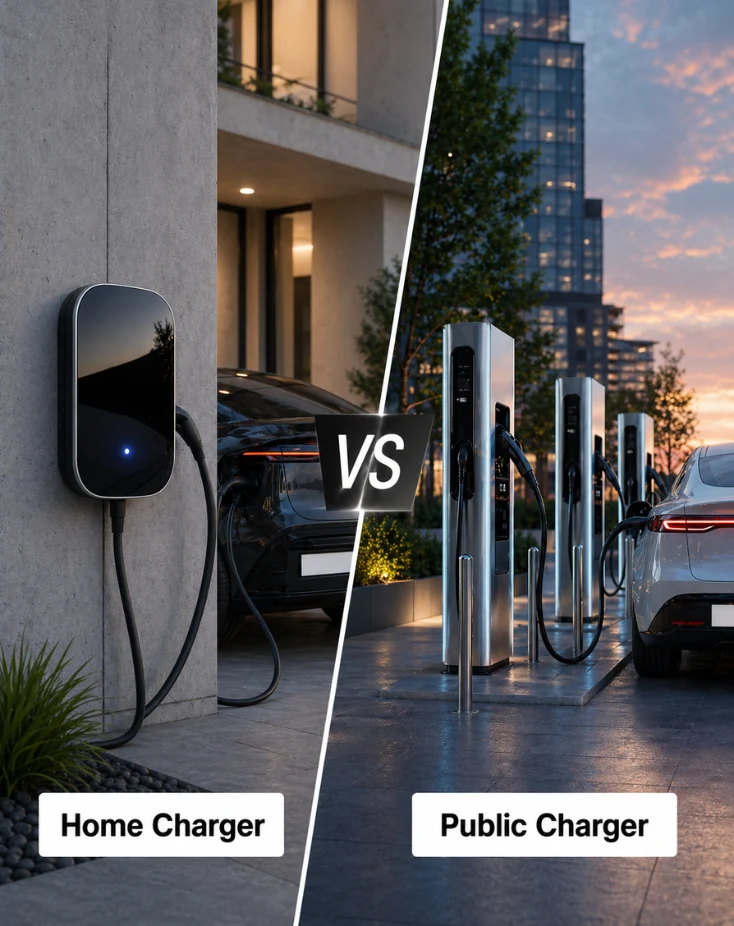
Electric vehicles are powered by electricity, not petrol,which means their energy costs aren’t directly tied to fluctuations in crude oil markets. While electricity prices in the UAE can be adjusted, they tend to follow a much slower, more predictable pattern set by local utility providers. Home charging, especially, is billed at residential electricity rates, which have remained far more stable than petrol.For most UAE EV drivers, home or workplace charging is the backbone of daily running. This allows owners to avoid the volatility of global oil swings entirely, instead budgeting based on a relatively fixed monthly electricity usage. Even when using public charge points,offered by operators like DEWA (Dubai Electricity and Water Authority), ADNOC, and various emirate-level networks,the cost per kilometre usually remains below the equivalent petrol spend.By diversifying the energy sources that power transportation (solar, nuclear, natural gas, and grid electricity), the UAE’s EV drivers are less dependent on any one global supply chain. This energy-source flexibility brings a measure of resilience that’s increasingly relevant during periods of regional tension.The UAE charging network: More accessible, more reliable
A decade ago, range anxiety and limited charging access were the main obstacles holding EVs back in the UAE. Today, the landscape is changing fast. Public charging infrastructure now spans shopping malls, hotels, business districts, highways, residential developments, and service stations. Leading operators like DEWA have rolled out hundreds of charge points across Dubai, while Abu Dhabi and Northern Emirates have their own expanding networks. Fast chargers are increasingly common on intercity routes as well, making longer journeys more practical.Home charging remains the simplest and lowest-cost option for most villa or townhouse residents. Plugging in overnight is enough to cover the next day’s typical commute or errands. For apartment dwellers, workplace and destination charging has grown,many new developments include shared EV chargers, and more employers are offering workplace charge points as a staff benefit. While some flats and older buildings still lack this convenience, the trend is clearly towards broader access.Reliable charging means more than just having a plug,it’s also about functional equipment, minimal queues, accessible payment, and consistent grid supply. In 2024, most urban UAE areas meet these requirements, giving drivers the practical confidence to choose an EV for both city use and longer trips.EV running costs compared to petrol: UAE realities
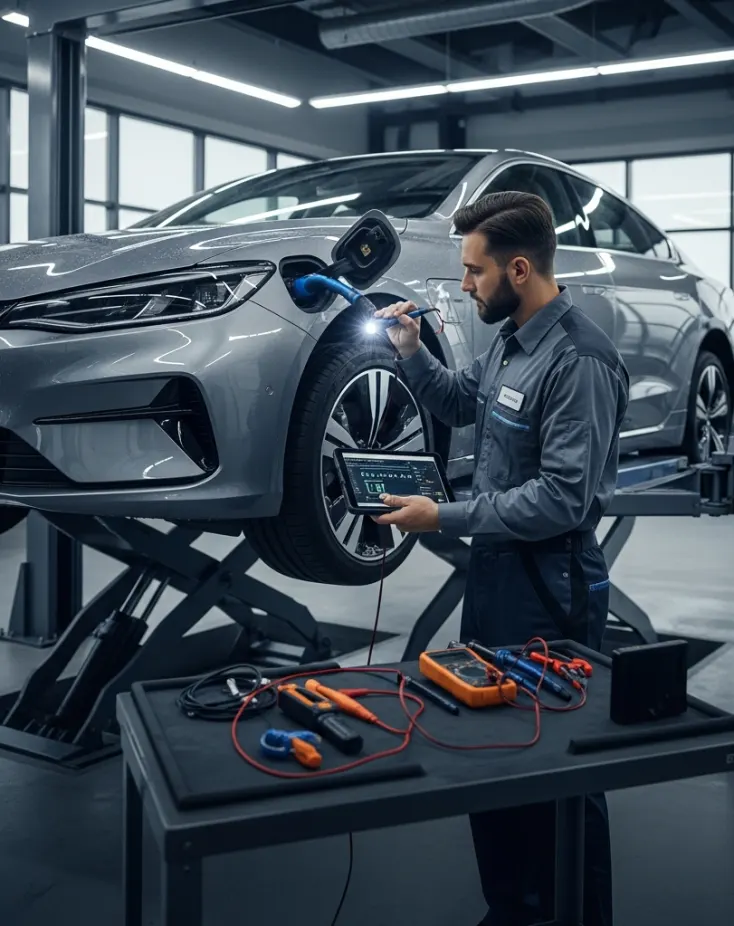
Cost stability is where EVs increasingly shine for UAE drivers. Charging an EV at home typically costs less per kilometre than refuelling a similarly sized petrol vehicle,even after factoring in peak and off-peak electricity tariffs. Public charger rates can be somewhat higher than home charging but still compare favourably to petrol, especially with frequent price hikes at the pump.It’s not just about fuel. EVs have fewer moving parts and don’t require oil changes, spark plugs, or exhaust-system maintenance. Tyres, brake pads, and cabin filters are the main recurring costs. Most UAE owners report sharply reduced annual service bills once they switch to electric. The difference is especially noticeable for those who drive longer distances or put many hours on a vehicle each week.What really makes a difference during regional tension is predictability. While no cost is truly fixed, EV “fuel” (electricity) and routine servicing are far less likely to surge due to global events than petrol. This predictability allows families and businesses to budget more accurately, taking fuel-market shocks mostly out of the equation.How cost comparisons play out in UAE numbers
- Home charging: Filling a typical EV battery (50-70 kWh) could cost AED 15-25, depending on rates and vehicle efficiency, delivering 300-400 km of range. That works out to as little as AED 0.05-0.08 per km in energy cost.
- Petrol: A typical saloon car at current (early 2024) prices might spend AED 0.30-0.45 per km on fuel, depending on real-world consumption and driving habits.
- Maintenance: EVs often reduce service bills by 30-50% compared to petrol vehicles over a multi-year period, as major engine work and frequent consumables are replaced by simpler checks.
When EVs offer more resilience in real-world UAE driving
For city commuters, families, and even many business fleets, the argument for EVs has become about more than just the environment. With established charging for daily use, clear savings per kilometre, and shielded exposure to oil-market swings, many drivers are now choosing EVs as a practical risk-management move as much as a green credential.EVs are particularly well suited for:- Urban commuters who travel predictable daily routes well within typical EV range
- Families with regular shopping, school runs, and weekend trips covered by home or nearby chargers
- Business fleets handling urban deliveries, ride-hailing, or taxi services where downtime and fuel costs must be tightly controlled
What could still hold some UAE drivers back from switching?
Despite growing advantages, not every driver in the UAE is ready or able to switch to an EV just yet. A few limitations remain, and it’s important to weigh them thoughtfully:- Charging access for apartment residents: Many older flats and some new towers have limited (or no) EV charging. Until more retrofits or shared solutions arrive, this can be a dealbreaker for some households.
- Upfront cost and model variety: While EV prices continue to fall globally, upfront purchase cost remains higher for some models. Qatar and the UAE offer some incentives, but not all EVs are available here yet, especially at entry-level price points.
- Long-distance, rural, or heavy-duty use: For those who regularly cover vast distances away from charging infrastructure, or need heavy towing, a petrol or hybrid vehicle may still be the best fit for now.
- Home charger installation limits: Renters or those in shared buildings often need landlord or building management approval, which is not always straightforward.