



%201.svg)

Anyone considering buying or already owning an electric vehicle (EV) in the UAE knows that things can work a bit differently compared to traditional petrol or diesel cars. EVs are quieter, cleaner, and, for many, represent the future of driving in the region. But the experience changes when it comes to insurance claims, especially after an accident or technical fault in 2026. Many owners are surprised to find that EV repairs, especially those involving batteries, sensors, and high-voltage systems, can face longer wait times before insurer approval and repair work even begin. Understanding why delays happen can help you set your expectations and avoid unnecessary frustration. This article explains the main reasons for longer EV claim timelines, from strict diagnostics to the challenge of sourcing parts, and gives practical advice for reducing delays when things go wrong.
Why EV insurance claims can take longer in the UAE
On the surface, processing an insurance claim for an EV might seem no different than for a petrol or diesel car. But under the bonnet, EVs have complex and high-value components that demand extra caution. Insurers must ensure hat repairs are not only effective but also completely safe for the owner and repair technicians. The most common reasons EV claims face longer approval times in the UAE are:
- Complex battery systems and high voltages: These require more detailed diagnostics and safety assessments.
- Sensor-rich vehicles: Advanced Driver Assistance Systems (ADAS), cameras, and radar sensors often require technical calibration and detailed post-repair certification.
- Specialist skills gap: Only certified EV technicians can handle high-voltage work, and there are fewer of these experts available compared to regular car mechanics.
- Parts availability: Many EVs in the UAE are imported, and batteries, sensors, or control units may not be available off the shelf.
- Stringent safety checks: After an accident, additional verifications are required before repair work is authorised, protecting both people and property.
More checks before work can begin
Insurers add several verification steps before they approve work on a damaged EV. This usually includes
- Requiring a workshop with qualified high-voltage technicians and the right diagnostic tools
- Requesting detailed reports from specialist equipment, sometimes needing manufacturer approval
- Insisting on battery safety and isolation inspections before any body repairs
- Holding off approval until parts prices, shipping times, and workshop capacity are confirmed
While some steps feel like bureaucracy, most are there for your safety and the quality of the final repair.
What’s normal for a 2026 EV insurance claim in the UAE?
By 2026, many UAE insurers have streamlined common EV processes, but significant claims involving the battery, sensors, or high-voltage systems can still take longer than repairs for petrol or diesel vehicles. For simple cosmetic damage, approval can sometimes be just as quick as for a conventional car, but once advanced systems are involved, a claim may take several days to weeks just for assessment and parts approval.
Battery damage: the biggest driver of delays
The battery is both the core and the most expensive part of an electric vehicle. Damage can occur from a direct impact, water intrusion, fire, or even overheating. But battery issues aren’t always obvious from a visible check. Battery repair or replacement requires insurers t
- Order specialised diagnostic scans to detect internal faults, thermal events, or hidden stress
- Commission thermal risk and safety tests following any high-impact or fire scenario
- Wait for a report from a qualified technician, sometimes requiring manufacturer review
If the battery passes initial scans but later fails further tests, timelines may stretch even further. Insurers are cautious because improper handling can cause electrical hazards, invalid warranties, or endanger occupants and technicians.
Why sensor damage and ADAS calibration take more time
Modern EVs in the UAE often come with a suite of sensors: parking, radar, camras, and lidar in some advanced models. Even a minor accident , like a scrap in a crowded Dubai car park, can knock a sensor out of alignment or damage wiring uner the bumper. Repairs need more than just replacing a cracked lens or detached wire. After any structural repair, sensors must be precisely aligned and recalibrated, sometimes in special conditions. Calibration must follow all bodywork, paint, or suspension repairs, not before. This often means claim approvals are delayed until the initial work is fully complete. Depending on the brand, the insurer may require an official post-calibration report or even manufacturer approval before releasing the vehicle. Without proper ADAS calibration, features such as autonomous braking or lane-keep assist may not function safely or could cause issues in future accidents.
High-voltage systems and strict safety checks
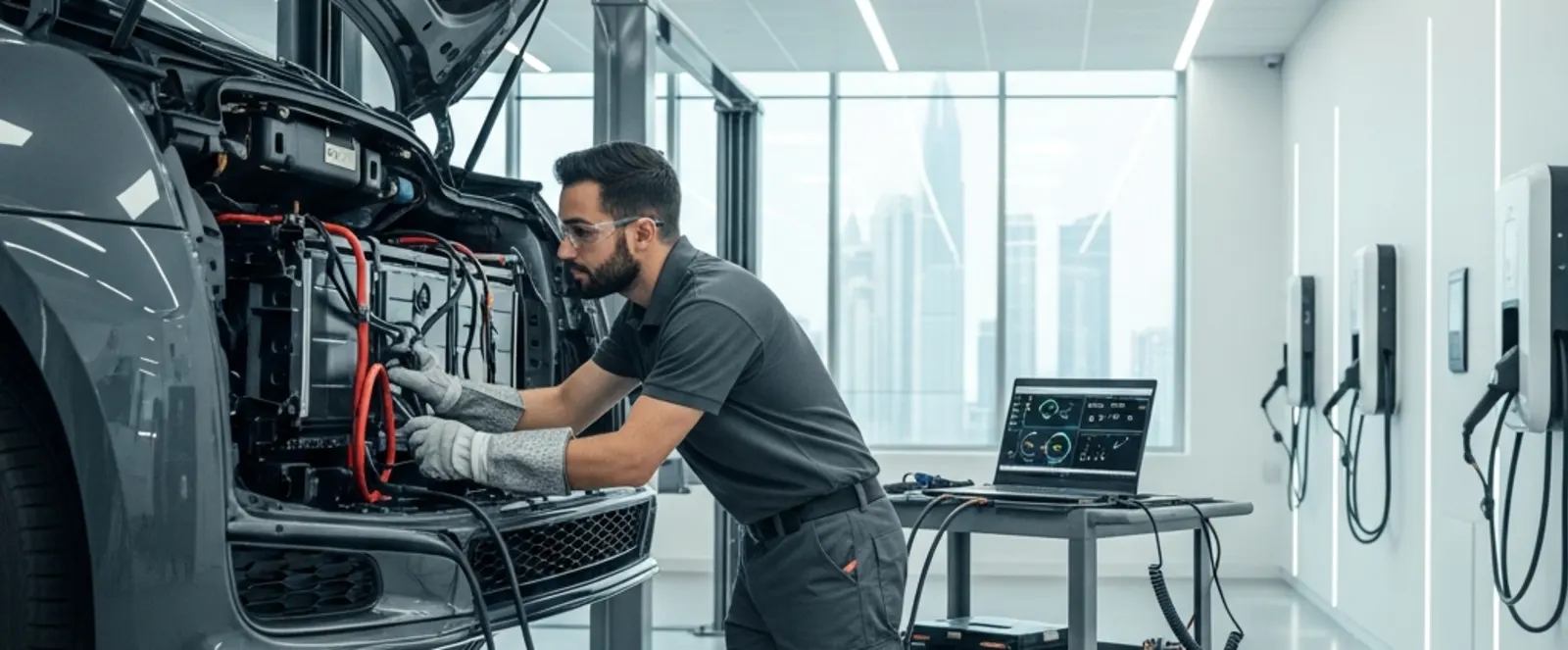
Safety is paramount when high-voltage repairs are needed. EV batteries, power electronics, and charging systems operate at voltages far above anything found in conventional vehicles, so every step must be verified by a certified technician. Before approving any high-voltage repair, insurers require:
- Initial isolation and safety inspection
- A workshop with up-to-date training and specialist safety equipment
- Confirmation that the high-voltage system is powered down and stored safely while awaiting parts
Not all authorised workshops in Dubai or Abu Dhabi have the capacity or qualified staff to start immediately. Some facilities must wait for a visiting master technician, extending claim wait times.
The critical role of software reports and diagnostic
Unlike petrol cars, many faults in EVs do not show as visible damage. Insurers rely on:
- Pre-repair software scans to check for hidden faults and record fault codes
- Diagnostic reports, sometimes sent to manufacturers for review
- Real-world system tests after repairs, not just trusting scan tools
These extra steps provide a full electronic snapshot of the vehicle’s health , essential for approving complex claims and certifying repairs are complete. In some cases, remote software approvals must still be backed up with local testing and reports. Insurers may reject a claim without enough evidence, especially if a fault could resurface later.
Parts sourcing and capacity: a real-world bottleneck in 2026
Many electric vehicles in the UAE are recent imports or low-volume models. That means parts such as battery modules, high-voltage wiring, sensors, and control units are not always available locally. Delays often occur because:
- Imported batteries and sensors need price checks, shipping quotes, and estimated lead times
- Most components, especially batteries, are high-value and require insurer approval before ordering
- Local workshops may lack the space to store damaged EVs long-term, especially if national guidelines require strict storage or quarantine for damaged batteries
If the approved workshop is busy or doesn’t have enough certified staff, the booking itself can take days or more after insurer approval. This is especially true during peak demand or if several claims for a specific EV brand arrive at once.
What UAE EV owners can do to reduce claim delays
Certain delays are just part of the process given EV complexity, but there are steps owners can take to help things along:
- Document everything: Take clear photos and record video of all damage, dashboard alerts, and the vehicle’s position before it’s moved. This evidence can speed initial claim review.
- Limit vehicle movement: Avoid starting or moving the car, especially after high voltage or battery impact, until a technician inspects it. Unauthorised movement can endanger safety or invalidate parts of the claim.
- Respond quickly: Return calls and emails from your insurer and workshop promptly. The sooner you provide details or documents, the faster the claim can progress.
- Supply any software logs: Some vehicles allow you to export diagnostic data. Providing this can reduce the need for repeat scans.
- Check workshop approval: Ask if your chosen repairer is already certified for your specific EV brand and technology. If not, your repair may be transferred, causing delays.
- Follow up regularly: If the claim seems stuck at any stage , especially at parts approval or while waiting for specialist review , ask for a status update or escalate with your insurer.
Delays are normal in certain steps, especially when waiting for imported parts or official reports. But if a claim feels forgotten or you see no movement for more than a week at a key stage, it’s worth pushing for answers.
Conclusion
As EV ownership grows across the UAE, insurance claim processes are evolving, yet not always keeping pace with the demands of battery, sensor, and high-voltage repairs in 2026. Extended approval and repair timings are usually due to safety, diagnostics, and the unique sourcing challenges that EVs present. Understanding the reasons for delays, combined with thorough documentation and proactive communication, can help owners manage expectations and get back on the road faster, even when advanced technology makes things more complicated than with petrol cars.