



%201.svg)

Electric vehicles promise owners less frequent maintenance than petrol or diesel cars , no engine oil to change, no spark plugs, and fewer moving parts to wear out. Yet, while EVs eliminate some of the headaches of traditional car ownership, one important system must not be overlooked: the cooling system. Especially in the UAE’s intense heat, proper cooling-system maintenance is crucial for anyone who wants to protect their EV’s range, battery life, and wallet.Owning an EV in the UAE means dealing with high ambient temperatures, demanding traffic, and frequent use of AC. These factors increase the stress on your car’s thermal systems. In this article, we’ll explain why EVs need cooling maintenance, which parts rely on proper temperature control, how heat impacts your range and battery, and how to spot cooling system issues before they cause bigger problems.
Why EVs Still Need Cooling System Maintenance
Many drivers make the fair assumption that, without an engine or motor oil, EVs largely eliminate regular service needs. However, this creates a dangerous misconception: thermal management is just as important , if not more so , for an EV’s health and performance.
No oil changes does not mean no thermal maintenance
Electric vehicles may skip the oil changes found in internal combustion engines, but they rely on sophisticated cooling systems to keep core components within safe operating temperatures. Without routine attention, EV cooling systems can quietly lose effectiveness, exposing some of the most expensive parts of your car to unnecessary risk.
EV reliability still depends on temperature control
Motors, inverters, chargers, and especially lithium-ion battery packs generate heat during operation and charging. If that heat isn’t pulled away efficiently, it doesn’t just mean a hot car , it directly impacts your ability to drive, charge quickly, and maintain long-term battery health.
What the EV Cooling System Actually Protects
Modern electric vehicles contain several expensive, heat-sensitive parts clustered together in tight spaces. These include:
Battery pack and battery management system
Your EV’s battery is its most valuable component. To preserve capacity and avoid early degradation, the cells must stay within a narrow temperature range. Overheating can cause accelerated wear, reduced storage capability, and, in extreme cases, system shutdowns or permanent damage. The battery management system (BMS) monitors and helps control this, but it relies on effective cooling hardware to do its job well.
Electric motor and power electronics
While EV motors are highly efficient, they still generate heat , especially under heavy loads, acceleration, or sustained high speeds. The inverter (which turns the battery’s direct current into the motor’s alternating current) and other power electronics also need cooling to prevent malfunctions and efficiency loss.
Inverter, onboard charger, and fast-charging hardware
When you plug in to charge, the onboard charger and, during DC fast charging, specialised hardware are responsible for safely filling your battery. Rapid charging is especially demanding, producing significant heat in both the battery and charging electronics. All these components rely on the vehicle’s thermal management system to charge as quickly and safely as possible.
How Heat Changes EV Performance and Battery Health
Proper cooling isn’t just a matter of comfort; it’s tied directly to how well your EV drives and how long it will serve you. Here’s what happens when things get too hot:
Why hot batteries charge slower
Lithium-ion batteries become less efficient as they heat up. Most EVs will automatically reduce charging speeds to protect the cells from excessive temperature, especially during rapid DC charging. Owners may notice DC fast charge sessions that start quickly, then slow down, or get cut short in hot weather.
How overheating can reduce range
When the battery or power electronics are running above their ideal temperature, the vehicle may deliberately limit acceleration or reduce available power. At the same time, energy is diverted to the cooling system, raising consumption and leaving you with less range than expected on a hot day.
How repeated heat exposure can shorten battery life
Chronic exposure to high temperatures is one of the main enemies of lithium-ion batteries. This leads not just to temporary loss of range, but to permanent battery capacity loss over time , meaning fewer kilometres before you need a costly battery replacement or repair.
Why UAE Driving Puts More Stress on EV Cooling Systems
The UAE’s climate is uniquely challenging for EVs. During summer, ambient air temperatures can easily exceed 40°C, with road surface temperatures even higher. Unlike in milder regions, the cooling system in a UAE EV must work far harder, far more often.
High ambient temperatures raise thermal load
When the air outside is already hot, the cooling system cannot dissipate heat as efficiently. This means any heat generated by the battery, motor, or electronics stays trapped longer. Cars parked outside can start journeys with battery packs already at elevated temperatures, putting immediate strain on the cooling circuit as soon as you set off.
Traffic, fast charging, and AC use compound the heat
Big city traffic in Dubai or Abu Dhabi means frequent stops and little air movement around the car’s radiators and heat exchangers. Long queues for fast charging can expose your vehicle to both high solar load and the heavy thermal demand of rapid charge cycles. Add in continuous air conditioning to keep the cabin comfortable, and it’s clear why thermal systems are under constant demand.
Common EV Cooling Problems and What They Cause
While EV cooling systems are robust, problems do develop , especially as vehicles age or accumulate kilometres. Neglecting cooling maintenance can bring a range of issues, often with few early warning signs.
- Coolant leaks and low fluid levels: Modern EV coolant is engineered to last, but ageing hoses, connectors, or heat cycles can cause leaks. Low fluid risks poor heat transfer and can trigger system warnings or even shut down.
- Degraded coolant and contaminated fluid: Over time, coolant can break down or pick up debris. Old or dirty coolant loses its ability to absorb and transfer heat, increasing operating temperatures.
- Blocked radiators, dirty heat exchangers, and poor airflow: Sand, dust, and road debris , common in UAE conditions , can block the system’s ability to expel heat. Even a partial blockage can raise temperatures and reduce efficiency.
- Weak pumps, valves, or sensor faults: Cooling system pumps or control valves may lose efficiency with age or develop faults. Failing temperature sensors may cause the system to under-react to overheating, allowing hot spots to develop unnoticed.
The knock-on effects of these issues are real: slower charging, reduced range, early battery ageing, and, if ignored, major repair costs.
Signs Your EV May Have a Cooling-System Issue
Because EVs have fewer moving parts, owners sometimes miss the warning signs that signal cooling trouble. Watch for these:
- Dashboard warnings or reduced performance: Most EVs will alert the driver if battery temperatures rise too high, often limiting power or charging speed. If you see a battery/temperature warning on your dashboard, don’t ignore it.
- Changes in AC performance, odd noises, or leaks: Unexplained changes in air conditioning, clicking or whirring from underneath the car, or visible drips or stains can all suggest cooling issues.
- Consistently lower range in hot weather: If your car consistently travels less distance per charge during hot spells, and it hasn’t before, poor cooling could be the culprit.
If you suspect a cooling system problem, address it quickly to avoid long-term consequences.
What EV Cooling-System Maintenance Should Include
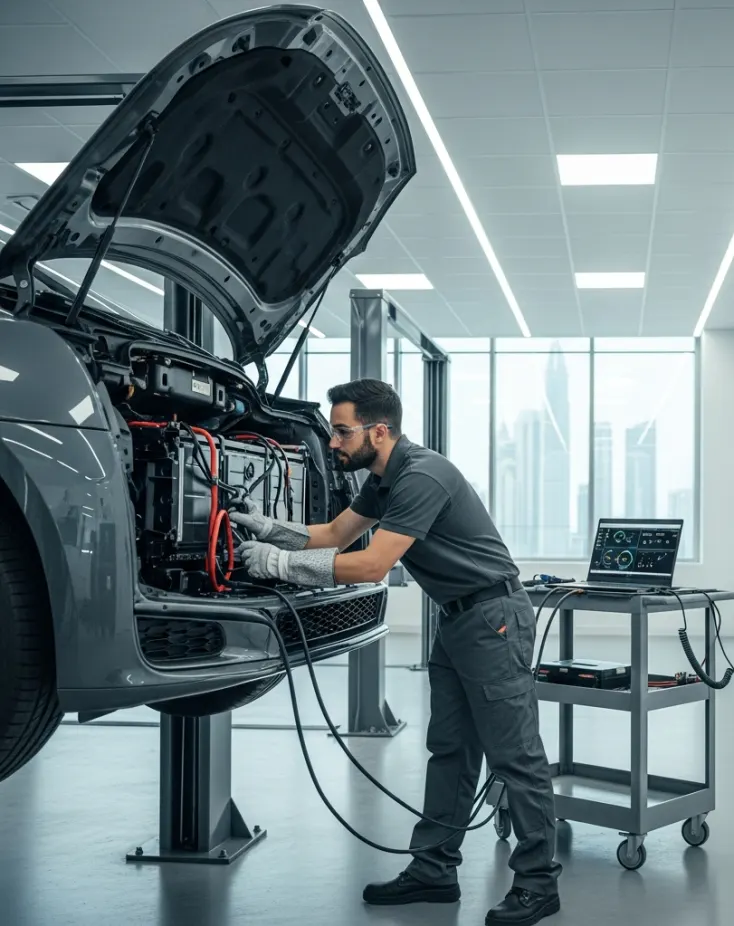
Proper cooling-system care isn’t just about topping up fluid. A skilled technician with EV experience should check:
- Coolant inspection and replacement: Not all EVs use the same coolant type or interval. While some manufacturers claim “lifetime” coolant, most UAE conditions call for inspection every 2-4 years or as specified in your owner’s manual.
- Pump, hose, and seal checks: Look for hardening, cracking, or leaks in all pipework. Make sure pumps run at correct speeds and seals show no signs of seepage.
- Radiator and airflow cleaning: Remove built-up sand, dust, and insects from radiators and heat exchangers , essential in the UAE.
- Software and diagnostics: Modern EVs log temperature readings and can flag even minor thermal issues. A qualified technician can run system checks to spot weak sensors or minor issues before they become major ones.
Ask about cooling inspection at every regular service, especially before the UAE summer hits. For new buyers, insist on a pre-purchase check that includes battery condition and cooling diagnostics , not just a basic visual check.
Conclusion
While electric vehicles bring significant savings on traditional maintenance, their cooling systems remain critical to long-term performance and reliability. Ignoring thermal maintenance , especially in the UAE’s punishing climate , risks battery degradation, reduced range, costly repairs, and frustrating charging limitations. Stay ahead by scheduling regular cooling system checks, addressing small issues before they cascade, and choosing technicians who understand the complexity of EV thermal management. It’s a simple way to protect your investment, keep your EV running at its best, and ensure you can rely on your car year-round in the Emirates.
.webp)

.webp)