



%201.svg)
April 22, 2026

Category :
Owner Tips
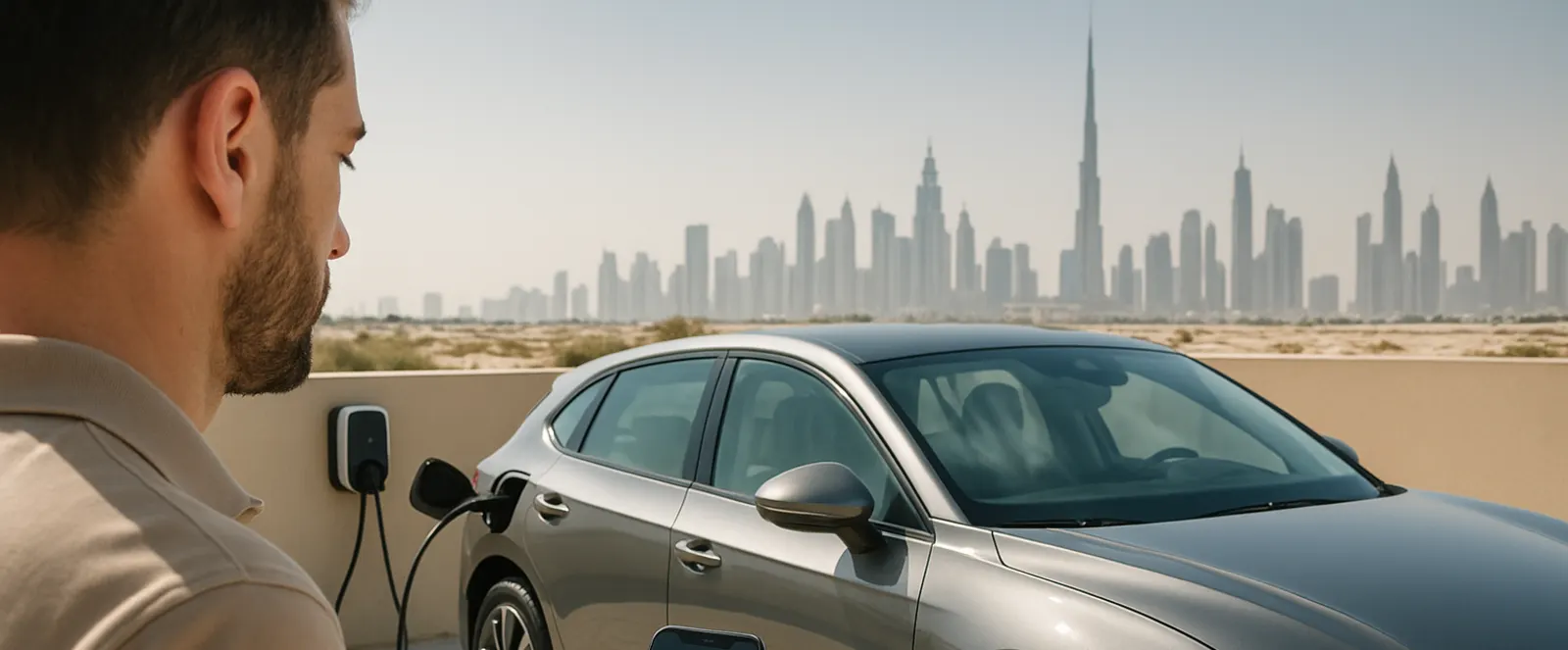
Electric vehicles (EVs) are well suited for the UAE’s forward-looking cities, but in the heart of a Dubai summer, every EV owner faces a unique challenge: keeping cool without surrendering too much driving range. Few things sap battery life faster than blasting the air conditioning (AC) in 45°C heat. Yet, comfort is not a luxury – it’s a necessity for anyone braving the city’s roads in peak summer.For those considering an EV or already driving one, it’s essential to know how air conditioning impacts your range, especially when outside temperatures soar above 40°C. Understanding where the biggest efficiency hits occur and how to plan around them can help you avoid getting caught short or sacrificing comfort when you need it most. In this article, we cut through the hype and the worry, giving a practical look at what EV drivers in Dubai can really expect, what influences AC energy use, and how you can keep your cool , both figuratively and literally , during the city’s hottest months.
How Much Range Does EV Air Conditioning Cost in Dubai Summer?
Running air conditioning in a Dubai summer will trim your EV’s range , the only real question is, by how much? You’ll generally see a bigger impact than you would in Europe or mild climates, because cooling the cabin from 50°C down to a tolerable 23°C requires significant energy. Although the exact figure depends on your car and driving habits, several patterns have emerged from real-world experience and local fleet data.- City driving in intense heat: Expect AC use to carve off 8–15% of your typical range when driving in urban conditions, especially after your EV’s been parked in direct sunlight. The effect is greatest in the first 10–20 minutes, when the system works hardest to bring down the cabin temperature.
- Highway driving in summer: The relative range loss usually drops to 5–10% at steady speeds. Highway airflow helps with cooling, and the AC system can run more efficiently when not constantly cycling.
- Short trips after heat soak: Even very short journeys can see 20% or more drawn for AC in the first few minutes, just to cool a heat-soaked interior.
Why the First 10 to 15 Minutes Use the Most Energy
A car that’s been baking in the sun can hit interior temperatures well above 60°C. That hot air and the heat stored in the seats, plastics and dash all need to be pulled down to safe, bearable levels. During this period, the AC draws maximum power , it’s not unusual for the system to temporarily consume several kilowatts, a significant chunk of what even a city drive takes from the battery. Once the cabin reaches your set temperature, AC demand drops sharply, but the initial spike can make short trips disproportionately energy-hungry in summer.Why AC Drains More Battery in Extreme UAE Heat
The main reason air conditioning costs more range in a Dubai summer is simple physics: the greater the difference between outside and target cabin temperature, the harder the AC must work. When outside air is 45°C or higher, even the best systems struggle to keep up, and energy demand increases rapidly.Battery Power Goes to Cabin Cooling and Thermal Management
AC doesn’t just cool you , it also keeps the battery and other high-voltage components from overheating. Most modern EVs use some of the AC energy to cool (or occasionally heat in winter) the battery pack itself, ensuring safe operation and preserving battery health. In the UAE, battery thermal management can account for a significant share of summer energy use.Heat-Soaked Cabins Need More Energy to Cool
After parking in the midday sun, an EV’s interior absorbs and stores huge amounts of heat. When you start driving, the AC system must pull this energy out of every surface , not just drop the air temperature. Heavily tinted windows, reflective sunshades, and shaded parking can cut this heat buildup and thus the AC load on your next journey.High Outside Temperatures Increase Battery Cooling Demand
Batteries generate heat during charging and use, and in Dubai’s summers the outside air offers little help in dissipating that heat. Many EVs will divert extra energy to keep the battery at optimal temperature, which can further eat into the car’s range even if cabin cooling demand is moderate.When Does AC Have the Biggest Effect on Range?
Air conditioning has a varied effect on range, with some situations creating higher energy demand than others. Understanding when these spikes occur makes it easier to adjust your expectations and drive planning.- Short trips after parking in the sun: The car is at its hottest, so AC draw peaks. Range loss per kilometre is highest in these first few minutes.
- Heavy traffic and long idling periods: AC keeps running even while stationary, and because no speed-based cooling airflow helps, the system depends fully on battery power.
- Fast highway driving in peak afternoon heat: Higher speeds increase wind resistance, meaning the drive motor uses more energy. AC runs at a near constant, but the percentage of total consumption may be lower than in slow, stop-start conditions.
Pre-Conditioning and Cabin Cooling Strategies That Save Range
One of the best ways to cut air conditioning’s attack on your range is to cool the cabin while the car is still plugged in , a feature now standard on many EVs. This can make a substantial difference on your first few kilometres by letting the AC do its hardest work before you even get in.Cooling the Cabin Before Departure
Start cabin pre-conditioning using your vehicle’s app or in-car timer while charging at home or work. The system takes mains power, not battery, to bring the car down to a comfortable temperature. This means the drive starts at a relaxed, cooled setting, and once on the road, the AC only needs to maintain rather than rapidly cool.Best Time to Pre-Cool While Plugged In
Aim to finish pre-conditioning just before departure, especially after the car’s been in the sun. This practice has two main benefits: first, it keeps you comfortable from the moment you step in, and second, it preserves driving range for the trip ahead.Settings That Cut Energy Use Without Losing Comfort
If you need to eke out more range:- Set cabin temperature a degree or two warmer (25°C instead of 22°C).
- Use recirculate mode to avoid continually drawing in hot outside air.
- Direct airflow only to occupied seats or zones where possible.
- Park in the shade or use a reflective windscreen shield to minimise interior heat gain.
How EV Model, Efficiency, and Heat Pump Design Change AC Impact
A key factor shaping AC-related range loss is vehicle design. Not all EVs are created equal when it comes to energy use in extreme heat.Why Efficient EVs Usually Lose a Smaller Share of Range
Highly efficient vehicles (those that already get more kilometres from each kWh) generally lose less of their range percentage-wise when running AC for the simple reason that their systems waste less energy overall. Lightweight models with strong insulation and optimised AC units , often found in premium brands , show smaller percentage drops.What Heat Pumps Help With (and Where They Do Not)
Some EVs use heat pumps for climate control, which are very efficient at heating in winter. In high-summer conditions, though, the difference between a heat pump and traditional air-con narrows, since the main challenge is explosively high ambient air. That said, the most advanced heat pump systems with smart thermal routing may shave a few percent off AC consumption but should not be expected to transform summer range in Dubai.Why Published Range Figures Rarely Match Dubai Summer Driving
Official range numbers are based on test cycles carried out in moderate climates, usually below 30°C, with limited air conditioning use. Dubai’s summer reality means your effective range may be 10–20% lower, or more, once you factor in AC, battery cooling needs, and the effect of consistently hot roads.How to Plan Trips with Realistic Summer Range in Dubai
In the UAE, optimism is not a range-saving strategy. The best way to avoid mid-route anxiety or unplanned charging stops is to add a buffer to your summer journey calculations.- Add a buffer: Expect to need 15% more battery than you would in winter or spring for the same trip.
- Charge before long drives: Try to start longer trips with a full battery, especially if you expect slow traffic or will be returning in the afternoon heat.
- Get into the habit: Make pre-conditioning, shaded parking, and moderate cabin settings standard habits. Over time, these small steps help preserve your battery’s health and keep your travel predictable.