



%201.svg)

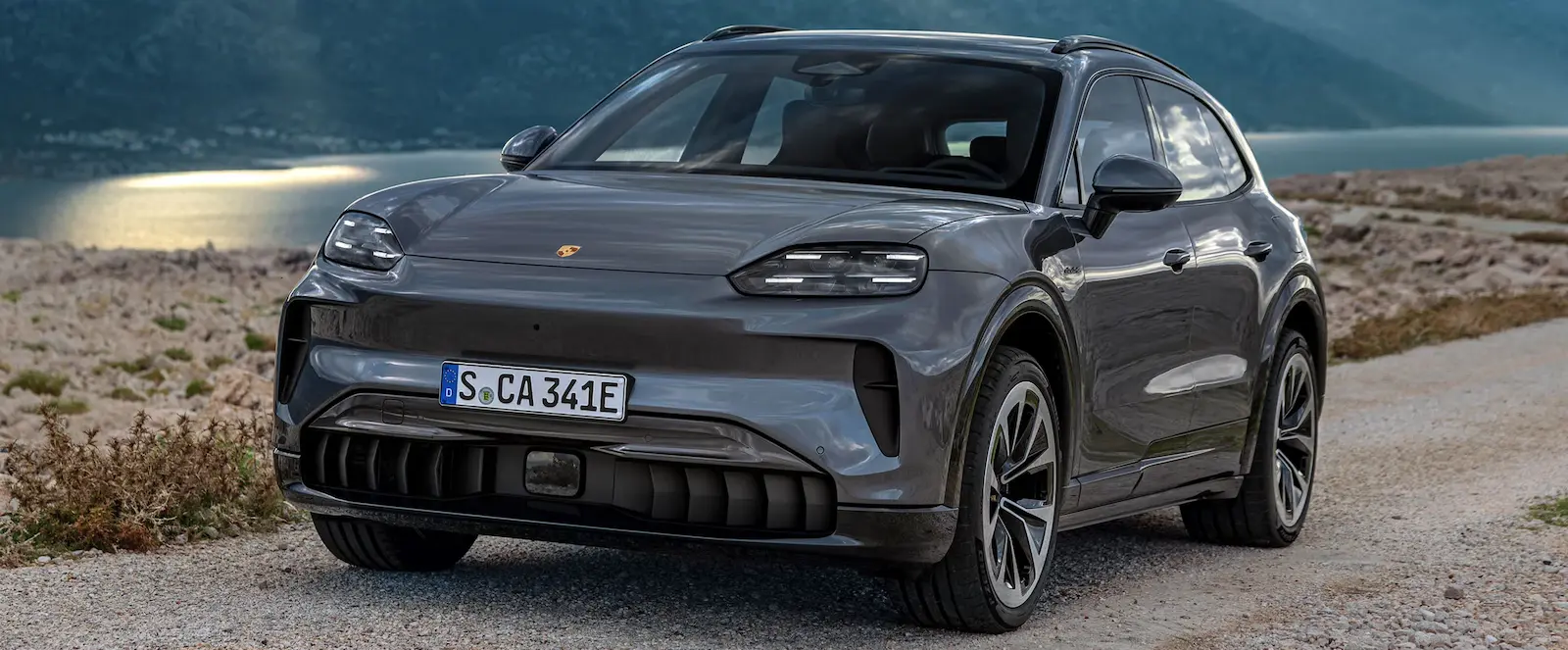
The Porsche Cayenne has always been more than a practical SUV. It is the model that proved a performance brand could build a family car without losing its identity. With the 2026 Porsche Cayenne Electric, Porsche is now taking that formula into the fully electric era, promising supercar levels of power, long distance usability and a cabin packed with new tech.
For drivers in the UAE considering a fast, premium electric SUV, the shift to a full EV version of the Cayenne is a big step. It changes how you drive, how you plan trips and how you think about servicing and long term ownership. This guide looks at what Porsche is offering with the new Cayenne Electric, and what it means for current and future Porsche owners in the region.
A new chapter for the Cayenne nameplate
The 2026 Cayenne Electric does not replace the petrol and plug in hybrid models. Instead, it joins them as a third pillar in the range. That means buyers can choose between combustion, hybrid and full electric while still staying within the Cayenne family.
Porsche positions the Cayenne Electric as a genuine flagship. At launch there are two core variants: the Cayenne Electric and the Cayenne Turbo Electric. Even the “standard” model delivers strong performance, while the Turbo Electric is currently the most powerful production Porsche, with four digit horsepower and acceleration that would have sounded unrealistic a few years ago.
Underneath, the car is built on a modern 800 volt architecture designed for fast charging and high efficiency. It shares a platform with other new VW Group EVs, but Porsche has tuned the design, drivetrain and chassis to match Cayenne expectations rather than clone anything else.
2026 Porsche Cayenne Electric price in the UAE
For buyers in the UAE, early pricing guidance places the 2026 Porsche Cayenne Electric in the upper end of the luxury SUV segment. Current indications suggest a starting price of around AED 412,700 for the base Cayenne Electric, rising to roughly AED 635,000 for higher trim levels and better equipped versions. Those figures are for the car before individual options, insurance and registration.
In practice, most real world cars in Dubai and Abu Dhabi will sit above the base figure once you add common packages, wheels and interior options. The more powerful Turbo Electric sits near the top of the range and will appeal to buyers who want supercar performance in an SUV body. As always, final pricing depends on local specification and dealer offers, but this gives a realistic bracket for planning and comparison with other high end electric SUVs.
Performance: an electric SUV with supercar numbers
Dual motors and all wheel drive as standard
Every Cayenne Electric uses two permanent magnet synchronous motors, one on each axle, so all wheel drive is standard. The system is programmed to favour the rear motor in normal driving to preserve efficiency and maintain a rear biased handling feel. Under heavier demand the front motor steps in, giving strong traction on launch and when exiting corners.
In the Cayenne Electric, total output is around 325 kW (435 hp), with a 0–60 mph time of about 4.5 seconds and a top speed of roughly 230 km/h. That is already quick for a large SUV and easily comparable with previous high power combustion Cayennes.
The Cayenne Turbo Electric steps into another category. Overboost power with Launch Control reaches about 850 kW, or 1,139 hp, with 0–60 mph in a claimed 2.4 seconds and a top speed of about 260 km/h. Those figures make it the most powerful Cayenne ever built and one of the fastest SUVs currently announced.
Braking and energy recuperation
The braking system combines powerful friction brakes with very high levels of regenerative braking. Porsche cites recuperation potential of up to around 600 kW in certain conditions, which means a large part of your everyday braking can feed energy back into the battery instead of being lost as heat.
For drivers in the UAE, this matters on both city streets and highways. In stop go traffic, the car can recover energy repeatedly. On long downhill sections, such as mountain roads in Hatta or Jebel Jais, strong recuperation reduces wear on the friction brakes and helps maintain control.
Battery, range and charging
Battery capacity and range expectations
The Cayenne Electric uses a new high voltage battery with a capacity of around 113 kWh. Porsche’s own figures suggest WLTP ranges up to roughly 550 to almost 600 km, depending on model and specification. Independent prototype tests have reported trip distances in the region of 320 to 370 miles on a single charge in mixed conditions.
Real world range in the UAE will depend heavily on speed, outside temperature and how often you use the full performance. However, even a conservative estimate leaves plenty of buffer for regular Dubai to Abu Dhabi trips, weekend desert drives and airport runs without constant range anxiety.
800 volt architecture and DC fast charging
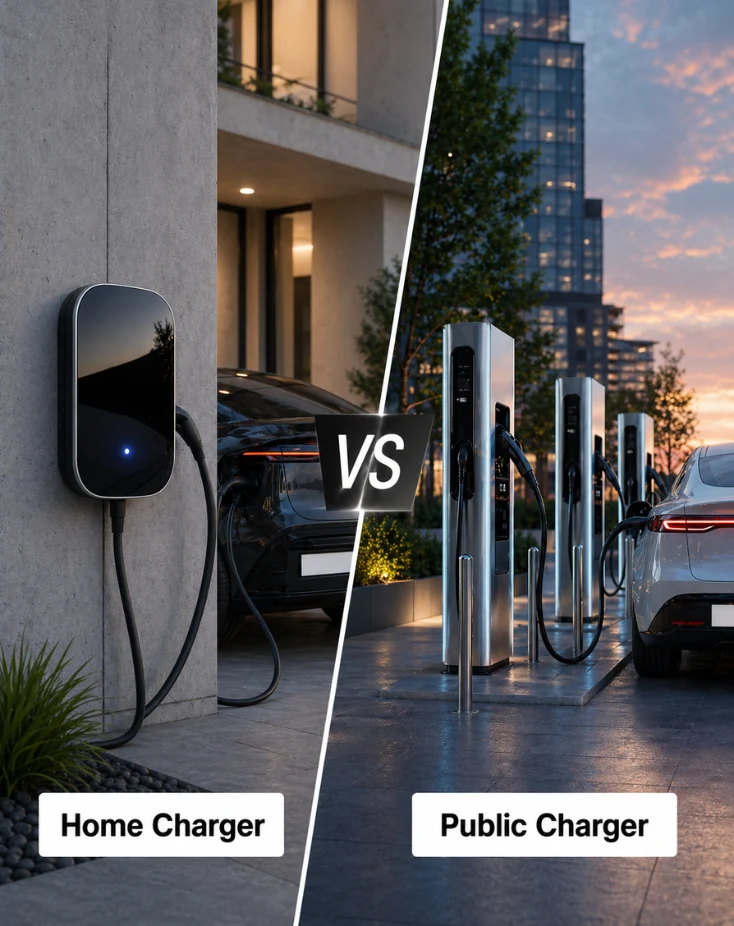
One of the most important technical features is the car’s 800 volt charging architecture. This allows very high DC fast charging speeds of up to 400 kW at compatible ultra rapid chargers. Under ideal conditions, Porsche says the Cayenne Electric can go from 10 to 80 percent state of charge in about 16 minutes.
For drivers who use public fast chargers strategically, that makes long distance travel much more practical. A short stop can add hundreds of kilometres of range, and the car’s charging planner can pre condition the battery so that it arrives at the charger in the ideal temperature window for maximum power.
Home, AC and wireless charging
At home or in private parking, most owners will charge via AC wallboxes in the 11 to 22 kW range, depending on local supply. This is the foundation of everyday EV ownership and will typically cover daily use without requiring public charging.
The Cayenne Electric also introduces an optional inductive wireless charging system on some markets. With this feature, you park over a floor plate and the car charges without a physical cable, at up to around 11 kW. For high end villas or covered parking in Dubai and Abu Dhabi, this could be an interesting quality of life upgrade when it becomes available in the region.
Interior and technology: the “Porsche interior of the future”
New digital cockpit and displays
Inside, the 2026 Cayenne Electric debuts a refreshed Porsche Driver Experience. The key element is a curved central OLED “Flow Display” that separates information and control areas more clearly. This is joined by a fully digital instrument cluster and an optional passenger display, so three screens can be visible at once.
Porsche has tried to avoid turning the cabin into a pure tablet wall. Physical buttons remain for core functions like climate control and audio volume, and a “Ferry Pad” hand rest helps the driver interact with both digital and physical controls without strain.
An augmented reality head up display is available, projecting navigation and driving information into the driver’s field of view so that arrows and prompts appear to sit naturally on the road. This can be particularly helpful when navigating unknown exits or complex junctions at highway speeds.
Porsche Digital Interaction and Voice Pilot
On the software side, the Cayenne Electric introduces Porsche Digital Interaction, a new UI layer that uses widgets and themes to personalise the cockpit. Owners can choose colour schemes that match the car, rearrange tiles and integrate third party apps for streaming, gaming and other services.
The Voice Pilot assistant is designed to understand more natural phrases, not just fixed commands. Using AI, it can handle linked queries, pick up context and manage navigation and media with fewer repeated prompts. Over time, this could become the main way many drivers interact with the car’s functions, especially in traffic.
A Digital Key function allows compatible smartphones and smartwatches to lock, unlock and start the car. Access can be shared digitally with family members or colleagues, which could be useful for households with multiple drivers or small business fleets.
Comfort, mood modes and space
The Cayenne Electric introduces Mood Modes that coordinate ambient lighting, sound, climate and seating to create different atmospheres, such as more relaxing setups for night driving or more energising settings for daytime. Surface heating can warm not only seats but also contact areas like door panels and armrests, improving comfort while using energy efficiently.
Practicality remains important. The luggage area offers generous volume, and the rear seats can be electrically adjusted and folded to flex between passenger space and cargo. Towing capacity can reach numbers that make trailers and larger bike carriers realistic options, which is relevant for owners with boats, off road toys or weekend gear.
Chassis, ride and off road capability
Adaptive air suspension and Active Ride
The Cayenne Electric uses adaptive air suspension with Porsche Active Suspension Management to balance comfort and handling. Ride height can be varied to suit city use, highway cruising or off road tracks. The system can lower the car at speed to improve efficiency and stability, and raise it when ground clearance is needed.
On some versions, Porsche Active Ride adds another layer of control by actively managing body movements. The idea is to keep the car flatter in corners without making the ride harsh in normal driving. For a heavy electric SUV, this kind of control helps the car feel agile rather than simply stable.
Rear axle steering and tight spaces
Optional rear axle steering improves agility in city streets and tight parking areas by turning the rear wheels slightly in the opposite direction at low speeds. This effectively shortens the wheelbase, making the Cayenne Electric easier to manoeuvre than its size suggests.
At higher speeds, the rear wheels turn in the same direction as the fronts, enhancing stability and lane change confidence. For UAE use, this means smoother highway lane changes, better behaviour on sweeping curves and easier management of narrow ramps in high rise parking.
Off road and desert tracks
Although most Cayenne Electric models will live on tarmac, Porsche has not ignored off road capability. Selectable off road modes, increased ride heights and specific front bumper designs in off road packages improve approach angles and provide better clearance on rough tracks.
The advantage of electric torque delivery is that power can be metered very precisely at low speeds. Combined with all wheel drive and traction control, this can make the electric Cayenne more capable on sand and uneven surfaces than many expect, provided tyre choices and pressures are appropriate.
Where the 2026 Cayenne Electric fits among rival EV SUVs
The Cayenne Electric will compete with a growing group of luxury electric SUVs, including the Audi Q8 e tron, BMW iX, Mercedes EQS SUV, Tesla Model X, Rivian R1S and upcoming models like the Lucid Gravity. Each of these offers its own mix of range, performance and technology.
Porsche’s approach is to lean heavily on its performance heritage and its experience from the Taycan. The brand aims to differentiate the Cayenne Electric through driving dynamics, braking feel, repeatable performance and charging speed, rather than chasing the absolute largest battery or the most screens.
For buyers in the UAE who already know Porsche, this familiarity matters. Many will already have experience with the Cayenne or Panamera and are looking for a way to move into full electric without feeling like they are moving to a completely different brand culture.
What this means for drivers in the UAE
Ownership and charging habits
For drivers in the UAE thinking about moving to a high performance electric SUV, the main changes will involve charging routines and trip planning. Daily use around Dubai, Abu Dhabi and Sharjah will be straightforward for anyone with home or workplace charging. Public DC charging will primarily be relevant for longer trips, heavy annual mileage or owners who cannot install a charger at home.
Heat management is another key factor in the region. The Cayenne Electric’s battery uses dual sided cooling to keep temperatures under control, and the thermal management system will work hard in summer. That makes regular system checks, software updates and coolant maintenance especially important in the UAE.
Service and repair considerations
An electric Cayenne removes oil changes and many traditional engine components, but it adds complexity in other areas: high voltage battery systems, powerful electric motors, advanced charging hardware and more software controlled modules.
Owners will still need specialist workshops who understand German premium vehicles, EV safety procedures and the electronics that drive features such as air suspension, rear axle steering and digital driver assistance. Brake systems, tyres, suspension and bodywork will continue to wear as normal, especially on heavy, powerful SUVs.
Independent experts with experience in Porsche and other German brands will have an important role alongside the official dealer network. They can support owners once warranties expire, handle post accident repairs and carry out diagnostics when software and hardware interact in unexpected ways.
Conclusion: a serious EV option for performance SUV buyers
The 2026 Porsche Cayenne Electric is not simply a Cayenne with the engine removed. It is a ground up rethinking of what a performance SUV can be in an electric age: extremely fast when asked, comfortable over long distances, capable on rough tracks and deeply digital inside.
For UAE buyers, the main questions will be practical rather than theoretical. Does the range fit their driving pattern. Can they install home charging. Are there trusted specialists available locally to support the car after the warranty period. As fast charging networks grow and more EV focused workshops build experience, the answers will become clearer.
What is already clear is that the Cayenne Electric will be one of the most important models in Porsche’s modern line up. For many existing Cayenne drivers in Dubai and Abu Dhabi, it will likely be the first realistic opportunity to move into a fully electric Porsche without giving up the space, comfort and image they are used to.

.webp)