



%201.svg)

A year or two ago, owning an EV in the Gulf felt a bit like being an early adopter.
You had to plan routes. You probably had a favorite charger. And if you lived in an apartment, you already knew the “charging at home” conversation could take weeks.
In 2026, it feels different.
Not because EVs suddenly became perfect, but because there are simply more of them around. More drivers. More fleets. More brands. More public chargers. More questions at workshops.
And when a market grows fast, three things get stressed first:
- charging availability
- service capacity
- parts availability
Let’s talk about what’s happening in the GCC, and what it means in real life if you’re buying, owning, or servicing an EV this year.
A quick snapshot of growth (so we stay grounded)
The GCC is still early compared to places like Norway. But the speed of change is real.
Roland Berger’s EV Charging Index 2025 (covering Qatar, UAE, and Saudi Arabia) says EV sales penetration in the GCC surveyed markets doubled from about 2% to about 4% in 2024. That’s small in absolute terms, but fast growth from a low base.
At the same time, governments and large operators are pushing charging networks forward. For example:
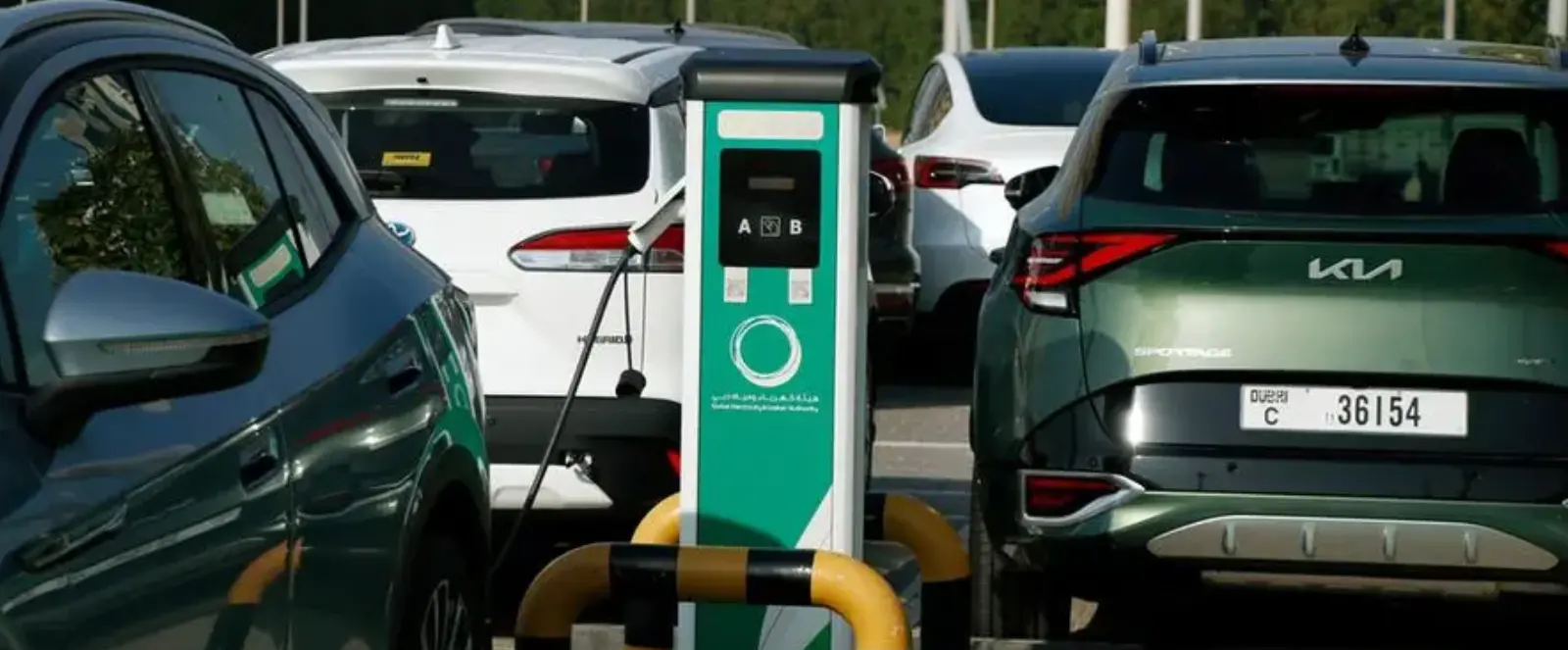
- Dubai’s DEWA “EV Green Charger” network has grown to more than 1,860 charging points (and DEWA lists multiple charger types, from wall-box to ultra-fast).
- ADNOC Distribution launched a flagship EV “Megahub” with 60 charging points on the E11, and says it plans 15 highway hubs by end of 2026 as part of a wider “electric highways” roadmap.
- Qatar has been expanding public charging, with reporting around 200 stations and a mix of DC fast charger power levels.
- Saudi Arabia’s PIF profile for EVIQ states a vision to deploy more than 5,000 chargers across the Kingdom.
So yes, this is growth. But here’s the thing: growth doesn’t automatically mean convenience. Sometimes it means the opposite for a while.
More EVs can create more queues, more workshop backlog, and more “part is not available right now” moments.
1) What growth means for charging in 2026
Charging gets better, then it gets busy
The first stage of EV adoption is easy on charging networks because there aren’t many cars. Even a basic network looks fine.
The second stage is where the pain starts. Not because chargers disappear, but because real life shows up:
- everyone plugs in after work
- malls get busy on weekends
- taxi fleets charge around the same hours
- summer heat pushes AC load up, which pushes energy use up
So charging growth has two jobs:
- add more chargers
- make the experience reliable and predictable
Dubai’s 1,860+ points is a strong sign of scale.
But scale alone isn’t the full story. Drivers care about:
- uptime (is the charger working?)
- speed (is it actually fast today?)
- access (blocked bays, parking rules, app issues)
- wait time (especially near dense areas)
The highway problem is getting real attention
City charging is one thing. Highway charging is another.
When a market grows, people stop “driving around the charger.” They expect to travel normally.
That’s why highway corridors matter so much. ADNOC’s approach is notable because it’s explicitly about long-distance coverage, not just a few chargers at random sites. Their 2026 plan includes 15 highway hubs by end of 2026 and 20 by end of 2027.
In real life, it looks like this:
- Today: many EV owners plan Abu Dhabi to Dubai trips around one or two known stops.
- With reliable highway hubs: the same trip becomes closer to petrol behavior. You top up when it suits you, not when anxiety kicks in.
Pricing changes how people use chargers
Free or cheap charging creates one kind of behavior. Paid charging creates another.
The UAE’s government-owned charging network UAEV moved to standardized tariffs effective January 2025: Dh1.20/kWh + VAT for DC and Dh0.70/kWh + VAT for AC.
A simple way to think about it is this:
- A typical EV might use around 18 kWh per 100 km (varies by model and speed).
- At DC (Dh1.20/kWh + VAT), that’s about Dh22.68 per 100 km.
- At AC (Dh0.70/kWh + VAT), that’s about Dh13.23 per 100 km.
What this means is… drivers will try harder to get home or workplace charging, and use fast chargers for “I need it now” moments.
And that matters because it changes demand patterns:
- fast chargers get slammed during peak hours
- slow and destination charging becomes more important for daily use
- buildings that support home charging become a real selling point
The catch is apartment charging is still the bottleneck
If you live in a villa, EV ownership is usually straightforward. Install a charger, plug in overnight, done.
Apartments are different. You need approvals, electrical capacity, parking allocation, and sometimes a building policy that hasn’t caught up yet.
As the GCC market grows, more buyers will be apartment residents. That means public charging has to cover a gap that home charging normally handles.
If you only do one thing, do this: before you buy an EV, confirm your charging routine, not just your range. Range is the easy part. Charging access is the daily reality.
2) What growth means for service capacity in 2026
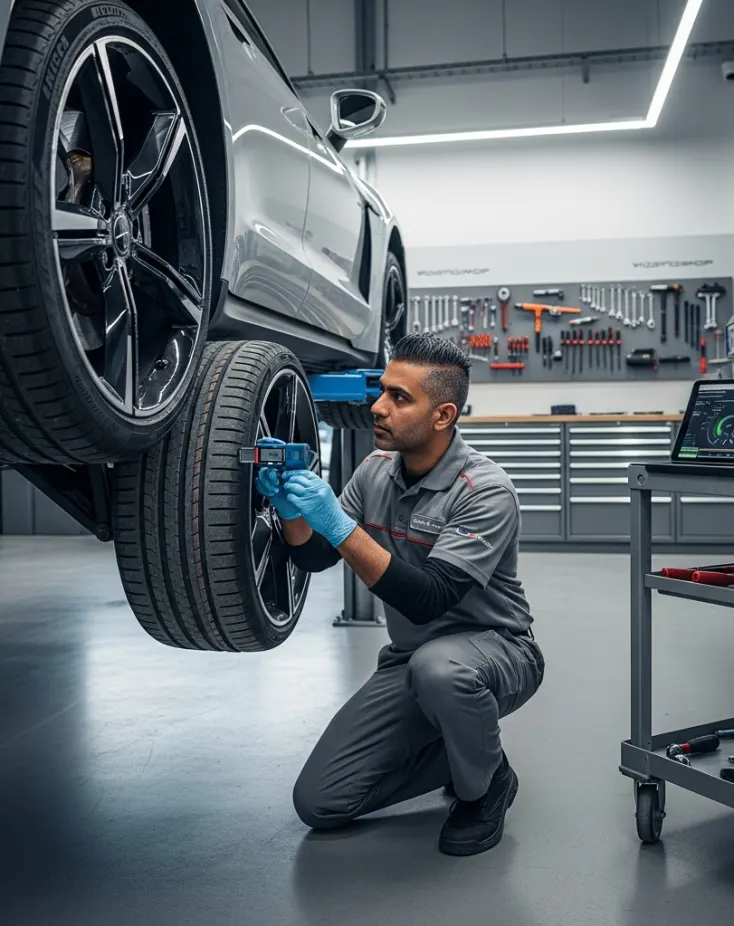
EVs need less routine service, but more specialist work
People often say EVs are “low maintenance.” That can be true for basic consumables.
But EVs are not “no maintenance,” especially in GCC conditions.
Here’s how it works:
- You may skip oil changes.
- But you still have tires, suspension, brakes, cabin filters, coolant loops, A/C systems, alignment, and software-related faults.
- And you also have high-voltage components that require training, safety steps, and proper tooling.
As EV numbers rise, the market hits a new problem: there are not enough technicians who can safely diagnose and repair modern EV systems at scale.
You can see this reflected in how many training programs exist just for high-voltage safety and EV component handling in the UAE.
The “queue effect” is coming
When EVs are new, most repairs go back to the dealer or OEM-approved centers.
As the fleet grows and ages, three things happen:
- more cars come out of warranty
- more second-hand EVs hit the market
- more owners look for independent specialists for value and speed
That’s when service capacity becomes a real constraint.
In real life, it looks like this:
- A simple sensor fault can take a day if the workshop has the right tools and access.
- The same fault can take a week if the car sits in a queue waiting for a bay, or waiting for a specialist to be available.
What “EV-ready service” actually means
This is where owners get tricked by vague claims.
A workshop can be great at petrol cars and still be unprepared for EV diagnostics.
If you’re choosing where to service an EV, look for specifics like:
- High-voltage safety process (isolation, lockout steps, PPE)
- OEM-level diagnostics access (or equivalent tooling for your brand)
- Thermal system tools (vacuum fill for coolant circuits, leak testing)
- Battery health reporting (not magic, but real data and logs)
- Clear fault finding process (not guesswork)
This can help if you’re trying to avoid the classic “we changed a part and the fault came back” cycle.
Fleet growth changes everything
The moment taxis, delivery fleets, or corporate fleets scale up, service demand changes.
Fleets don’t “wait and see.” They run daily. Downtime costs money. That pushes the ecosystem to mature faster.
And you can already see signs of that in charging rollouts tied to taxi electrification and large charging hubs.
3) What growth means for parts in 2026
Parts are not just about availability, they’re about lead time
With EVs, the parts list shifts. Some parts you replace less. Other parts become more important.
Common EV-related parts that can stop a car (and are not always stocked locally):
- charge port components and locking mechanisms
- onboard charger modules
- DC-DC converters
- coolant pumps, valves, sensors (thermal management)
- A/C compressors designed for EV systems
- battery contactors and high-voltage wiring components
- inverter or power electronics components (varies by model)
Now add growth.
When more EVs enter the market, parts demand becomes less predictable. Workshops and distributors need to decide what to stock. Importers need to decide what to prioritize.
And there’s another layer: global supply chain volatility.
A 2025 Atradius automotive industry report expected global motor vehicles and parts production to contract in 2025 and 2026 due to tariffs and supply chain disruption risk.
The Wall Street Journal also reported parts disruptions tied to issues like aluminum supply constraints and broader trade pressures.
What this means is… even if your issue is local, your fix can depend on global logistics.
More brands = more parts complexity
The GCC market is also seeing more brand variety, including a growing wave of Chinese EVs in the UAE.
That’s good for buyers because it increases choice and often improves value.
The catch is support can vary by brand and by importer. Parts pipelines, diagnostic access, and warranty processes are not equal across every new entrant.
So parts planning becomes more important in 2026 than it was in 2023.
The practical takeaway: how to plan as an EV owner in 2026
You don’t need to overthink it. You just need to stop assuming “EV = simple” and replace that with a few smart checks.
Before you buy (or import) an EV
- Confirm your charging plan. Home, work, or reliable public. Not “I’ll figure it out later.”
- Check connector compatibility and local charging standards for your routes.
- Ask about parts lead times for common failure points (12V battery, charge port, cooling parts, sensors).
- Verify service options outside the showroom. Who can diagnose it locally if the dealer is booked?
After you buy
- Keep service records and fault history. It helps with resale and speeds up diagnosis.
- Don’t ignore thermal system warnings. In the Gulf, cooling is not optional.
- Service brakes even if you use regen. Low brake use can still create issues over time.
- Treat tires like a consumable. EV torque and weight eat tires faster if alignment is off.
If you’re running a fleet
- Plan charging like you plan fuel. Peak times matter.
- Track downtime causes. The top 20% of issues usually create most downtime.
- Stock a small set of high-impact parts (filters, sensors, coolant-related items, brake service items) based on your fleet model mix.
So, is GCC EV growth in 2026 a good thing?
Mostly yes.
More EVs usually means:
- better charging coverage
- better technician skills in the market
- more predictable parts supply over time
But there’s a messy middle stage, and 2026 sits right inside it.
If you understand that, you’ll make better choices:
- you’ll pick a car that fits your charging reality
- you’ll choose service based on capability, not branding
- you’ll avoid long downtime because you planned for parts and support upfront
And honestly, that’s the difference between “EV ownership is easy” and “EV ownership is stressful.”